
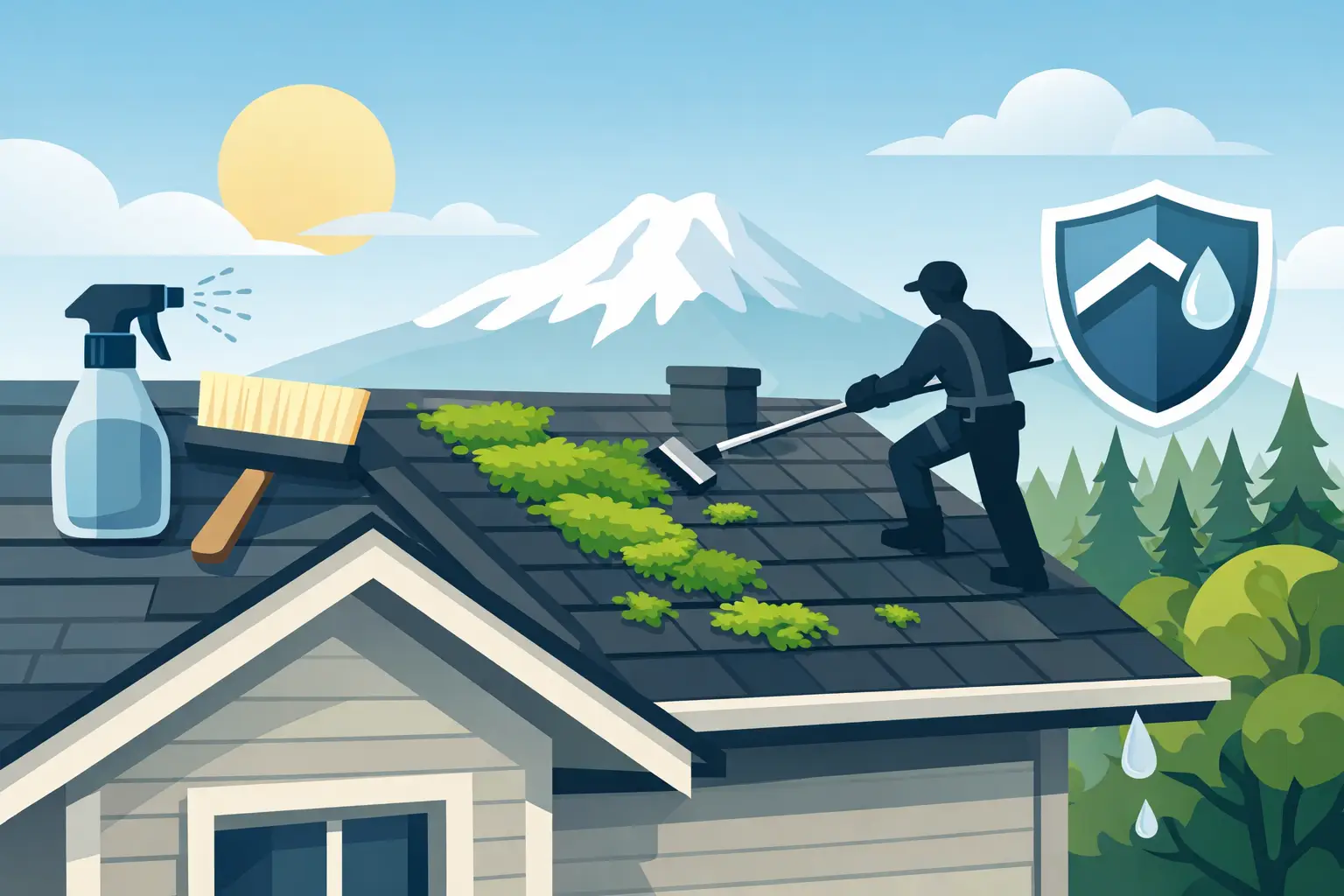
Moss usually starts where homeowners are not looking – on the north side of the roof, under overhanging branches, and in the damp areas that stay shaded long after the rest of the house dries out. A good roof moss prevention guide starts with one simple fact: moss is not just a cosmetic problem. In western Oregon, it can hold moisture against roofing materials, shorten roof life, and create repair issues that cost far more than routine maintenance.
In Roseburg, Coos Bay, and throughout Coos and Douglas County, moss grows fast because our climate gives it exactly what it wants. Rain, cool temperatures, shade, and debris on the roof create the right conditions. If you wait until the roof is heavily covered, prevention turns into cleanup and repair. The better approach is to stop growth before it takes hold.
Why moss grows on some roofs faster than others
Not every roof develops moss at the same rate. Age matters, but roof design and the surrounding property matter just as much. A roof with heavy tree cover, slow drainage, and little direct sun will usually grow moss faster than a roof that dries quickly after rain.
Roofing material also makes a difference. Asphalt shingles can be especially vulnerable once grit starts wearing away, because moss can anchor into rougher, weakened surfaces. Low-slope and flat roofing systems have a different issue. Moss may not always appear in the same thick, visible patches you see on shingles, but standing moisture, clogged drains, and organic buildup can still create conditions that lead to algae, moss, and surface deterioration.
That is why prevention is never one-size-fits-all. A steep roof under fir trees needs a different maintenance rhythm than a manufactured home roof in open sun. The goal is the same in both cases – keep the roof dry, clean, and draining the way it should.
Roof moss prevention guide: what works best
The most effective moss prevention is basic roof care done on time. That starts with keeping the roof surface free of leaves, needles, and branches. Organic debris traps moisture and gives moss a place to start. Once that layer sits through a wet season, growth can spread quickly.
Trimming back overhanging limbs helps more than many property owners expect. More sunlight and better airflow allow the roof to dry faster after rain. This will not eliminate moss by itself, especially in coastal and valley areas, but it reduces the constant dampness that feeds growth.
Gutter and drainage maintenance matter just as much. When gutters clog, water can back up along roof edges and keep lower sections wet. On flat or low-slope roofs, blocked drains or scuppers create ponding, and that standing water is hard on the roofing system even before moss becomes visible. A roof that drains correctly stays in better condition and is easier to maintain.
Regular treatment can also be part of a sound prevention plan. In areas with recurring growth, professional moss treatment helps stop regrowth before it spreads deep into the roof surface. The timing depends on the roof type, the amount of shade, and how aggressive moss has been in past seasons. Some properties need attention every year. Others can go longer.
What homeowners should avoid
Many roofs get damaged not by moss, but by the wrong cleanup method. Pressure washing is one of the biggest mistakes. On shingle roofs, it can strip away protective granules and force water where it does not belong. On flat roofing systems, aggressive washing can damage seams, coatings, or flashing details.
Scraping moss off too hard can create similar problems. If the roof surface is already aging, rough removal can loosen shingles, scar membranes, or break down edges around penetrations. The result is a roof that may look cleaner for the moment but is more likely to leak later.
Store-bought solutions can help in mild cases, but they are not always the right answer. Some products are too harsh for certain roofing materials, and some are applied without fixing the conditions that caused the growth in the first place. If shade, debris, and drainage issues remain, moss usually comes back.
Prevention looks different on flat and low-slope roofs
For homes and commercial buildings with flat or low-slope roofs, moss prevention is less about appearance and more about function. These roofs rely on proper drainage, sound seams, and clean surfaces. If drains are blocked by leaves or roof debris, water sits longer, and the roofing system ages faster.
That makes inspections especially important. Small drainage problems can go unnoticed until they turn into soft spots, membrane wear, or interior leaks. A routine service visit can catch those issues early and keep the roof working the way it was designed to work.
Manufactured home roofs also need a careful approach. Their roofing systems often have specific repair and maintenance requirements, and shortcuts can do more harm than good. If moss is recurring on a manufactured home, the right fix usually involves both treatment and a closer look at drainage, seams, and roof condition.
When prevention is enough and when repair is part of the job
Sometimes a roof only needs maintenance. Other times, moss is a sign the roof has already been under stress for years. If shingles are lifting, flashing is failing, or the roof deck has stayed wet long enough to cause damage, treatment alone will not solve the real problem.
This is where experience matters. A contractor should be able to tell you whether the roof needs cleaning, treatment, repair, or replacement – not just sell the biggest job. In many cases, a targeted repair combined with ongoing maintenance is the most practical option. In other cases, especially on older roofs near the end of their service life, repeated moss problems may be a sign that replacement is the more cost-effective choice.
That answer depends on the roof’s age, the type of material, how far the growth has spread, and whether moisture has already worked below the surface. There is no honest shortcut around that evaluation.
A realistic roof moss prevention guide for Oregon property owners
The best plan is simple and consistent. Have the roof checked before heavy winter weather if possible, and again after the wet season if the property has a history of moss growth. Keep gutters and drains clear. Remove roof debris before it sits and holds moisture. Cut back limbs that keep the roof shaded all day. If treatment is needed, use a method that matches the roofing material and the condition of the roof.
For commercial buildings and multi-unit properties, scheduled maintenance is usually the better investment than waiting for visible trouble. Leaks, drainage issues, and surface wear can interrupt operations and cost more to address once they spread. Property managers already know this with HVAC and pavement. Roofing should be handled the same way.
For homeowners, the main point is straightforward. Moss is easier and cheaper to prevent than to remove after years of growth. A little routine care protects both the roof and the budget.
In this part of Oregon, roof maintenance is not extra. It is part of owning property. If your roof stays damp, sits under trees, or has already shown signs of moss, it is worth addressing now while the fix is still simple. Rich Rayburn Roofing has seen firsthand that steady maintenance is what keeps small roof issues from turning into expensive ones later.