

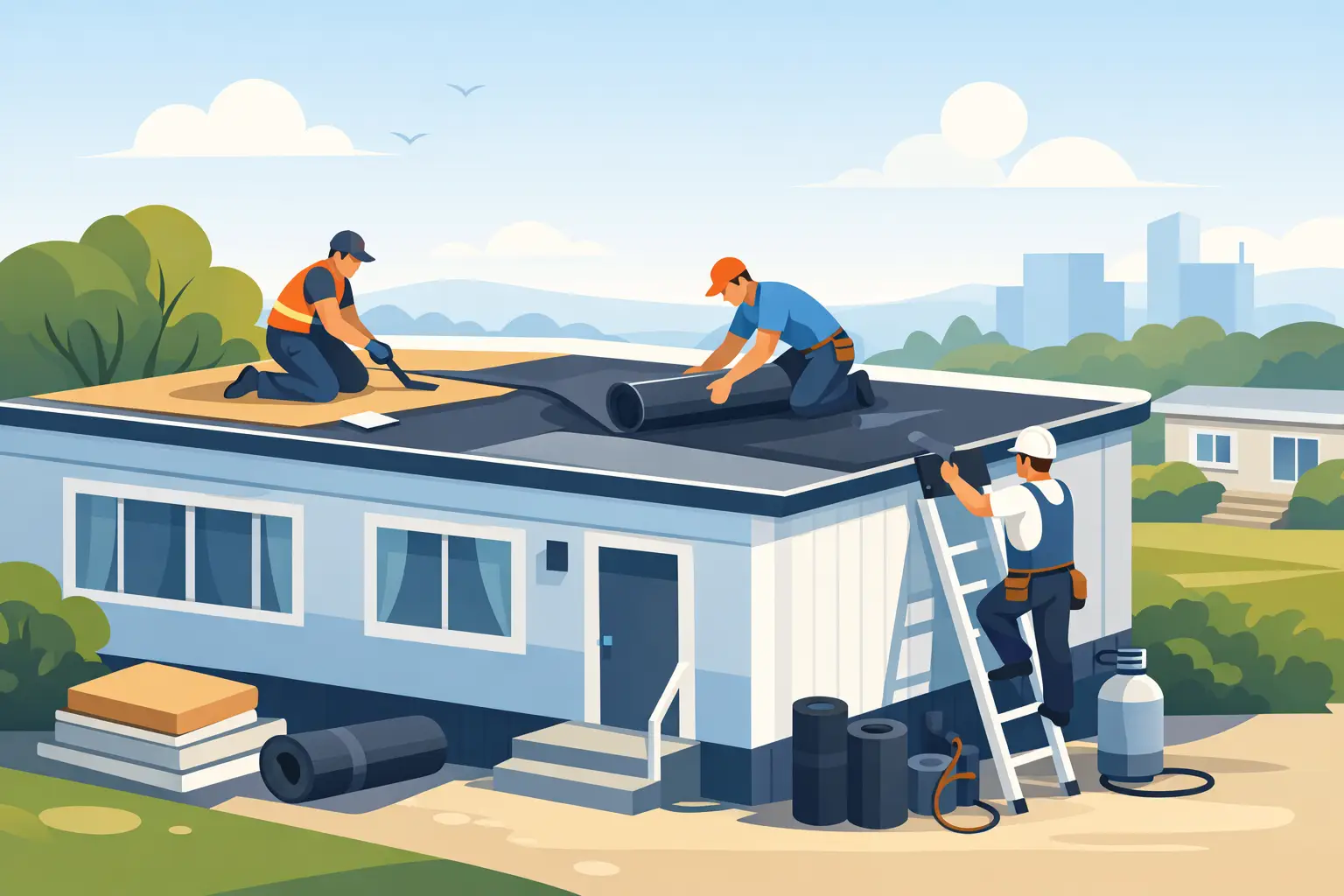
A soft spot near a ceiling vent or a brown stain that keeps growing after every storm usually means the same thing – your roof is past another patch. Manufactured home flat roof replacement becomes the smarter move when leaks keep returning, the surface is aging out, or the roof deck has started to take on water. Waiting too long usually turns a roofing job into a structural repair, and that gets expensive fast.
Manufactured homes have different roofing needs than many site-built homes. The spans are different, weight matters more, and many older homes have low-slope or nearly flat roof systems that are vulnerable around seams, edges, vents, and ponding areas. That is why replacement decisions should be based on the roof’s condition, the home’s structure, and the kind of weather it has to handle year after year.
When manufactured home flat roof replacement makes more sense than repair
Not every leak calls for a full replacement. Some roofs can be repaired effectively if the damage is isolated and the membrane still has useful life left. A single split near a pipe boot or a flashing issue at the edge can often be fixed without tearing off the whole system.
The problem is that many flat manufactured home roofs do not fail in just one place. They start showing their age across the whole surface. Seams open up, old coatings wear thin, soft decking develops under chronic leaks, and water starts finding multiple entry points. In that situation, patching one section may stop one leak while another shows up next month.
Replacement is often the better investment when the roof has widespread deterioration, repeated leak history, visible sagging, or signs of trapped moisture under the roofing material. If the roof has already been coated or repaired several times, another repair can turn into money spent delaying the inevitable.
What makes these roofs different
A manufactured home flat roof replacement is not just a smaller version of a commercial flat roof job. The details matter. Many manufactured homes have lightweight framing and roof assemblies that need a roofing system matched to the structure. Adding too much weight or layering over damaged materials can create problems that do not show up right away.
Drainage is also a factor. Even on a roof that looks flat from the ground, there should still be a designed path for water to move off the surface. If the roof has settled or the deck has weakened, ponding water can speed up failure. Oregon’s wet weather does not give roofing problems much time to stay minor.
Penetrations are another common weak point. Skylights, vents, edge terminations, and transitions between roof sections all need careful attention. On many older manufactured homes, these areas have been patched more than once. Good replacement work solves those details instead of burying them.
Material options for a manufactured home flat roof replacement
The right material depends on the roof’s condition, the budget, and how long you want the system to last. There is no one-size-fits-all answer.
Single-ply membranes are a common choice because they can provide strong weather protection without unnecessary weight. In the right application, they offer a clean, durable surface and fewer exposed seams than some older systems. They also tend to be a practical fit for low-slope roofs where watertight seams matter.
Coating systems can work in some situations, but they are not the same as replacement. If the underlying roof is still sound and the coating is being used as a restoration strategy, it may buy more service life. If the deck is soft, the membrane is failing, or moisture is trapped below, a coating is usually just covering a bigger problem.
In some cases, a retrofit approach may be considered. That can make sense when the structure is suitable and the goal is to improve drainage or create a more durable roof assembly. Still, retrofit work has to be evaluated carefully. What looks cheaper upfront can cost more if it leaves damaged substrate in place or creates ventilation and fastening problems later.
What affects cost
Homeowners often ask for a price per square foot, but that only tells part of the story. The actual cost of manufactured home flat roof replacement depends on what is found after inspection.
Roof size obviously matters, but so do tear-off conditions, deck repairs, edge detail work, and the number of penetrations. A roof with years of trapped moisture under old material is a different job than a roof with a clean substrate and one failing membrane layer. Access also matters. If the crew can work efficiently and stage materials without difficulty, labor stays more controlled.
Material choice changes the number too. So does the level of prep needed to get a proper installation. A low price can look attractive until you realize it skips the details that make the roof last. On flat roofs, shortcuts usually show up as leaks.
That is one reason experienced flat roof contractors often work differently than larger crews chasing volume. Smaller, skilled crews can move efficiently while keeping a close eye on workmanship. That matters on manufactured homes where details are not optional.
The replacement process
A proper replacement starts with inspection, not guesswork. The first step is determining whether the roof needs repair, restoration, or full replacement. That means looking at the membrane, flashing, decking, drainage, and any signs of interior water intrusion.
If replacement is the right call, the next step is planning the system around the home’s needs. That includes choosing materials, reviewing edge conditions, and identifying any structural or substrate repairs that should happen before the new roof goes on.
During tear-off, the goal is to remove failing material and expose any hidden damage. This is where experience pays off. Once the roof is open, soft decking, deteriorated edges, or poorly done older repairs can be addressed instead of covered over.
Installation should focus on clean seams, proper fastening or adhesion, solid flashing work, and careful treatment around penetrations. On a flat or low-slope roof, small details do a lot of the heavy lifting. A roof can look fine from the driveway and still be vulnerable if those details are rushed.
Timing matters more than many owners think
Many people wait until an active leak forces the issue. That is understandable, but it is rarely the most cost-effective time to replace a roof. Water moves sideways, insulation holds moisture, and damage often spreads further than the stain on the ceiling suggests.
If your roof is aging, has been patched several times, or shows signs of softness underfoot, it is better to have it evaluated before the next heavy rain cycle. A planned replacement gives you more control over scheduling, material selection, and budget. Emergency work narrows your options.
For owners in Roseburg, Coos Bay, Coos County, and Douglas County, that timing matters because long wet stretches can turn a manageable roofing problem into interior damage, mold concerns, and deck repairs. Flat roofs do not give much warning once they are at the end of their service life.
Choosing the right contractor for manufactured home flat roof replacement
This is specialized work. Not every roofer who handles shingles or general roofing work is equipped for flat manufactured home systems. You want a contractor who understands low-slope materials, drainage, flashing details, and the structural considerations that come with manufactured homes.
Ask direct questions. How often do they work on flat roofs? Do they inspect the decking and substrate before recommending a system? Are they set up to handle repairs discovered during tear-off? Can they explain why one material is a better fit than another for your home?
Straight answers matter. So does local experience. A roofer working in Oregon’s coastal and inland conditions should know how moisture, moss, standing water, and repeated storms affect roof performance over time. Rich Rayburn Roofing has built its work around flat roofing systems, and that kind of focused experience tends to show up in the finished job.
What to do if you are not sure yet
If you are still deciding between repair and replacement, that is normal. The right answer depends on the age of the roof, how many leaks you have had, whether moisture has reached the decking, and how long you plan to keep the home.
Sometimes a repair buys useful time. Sometimes it just delays a larger bill. The only reliable way to know is to have the roof inspected by someone who works with flat systems regularly and can tell you what is actually happening beneath the surface.
A roof over a manufactured home does not need fancy language. It needs to stay dry, hold up in bad weather, and be installed right the first time. When your current roof can no longer do that, replacing it is not just maintenance – it is protection for the home underneath.