
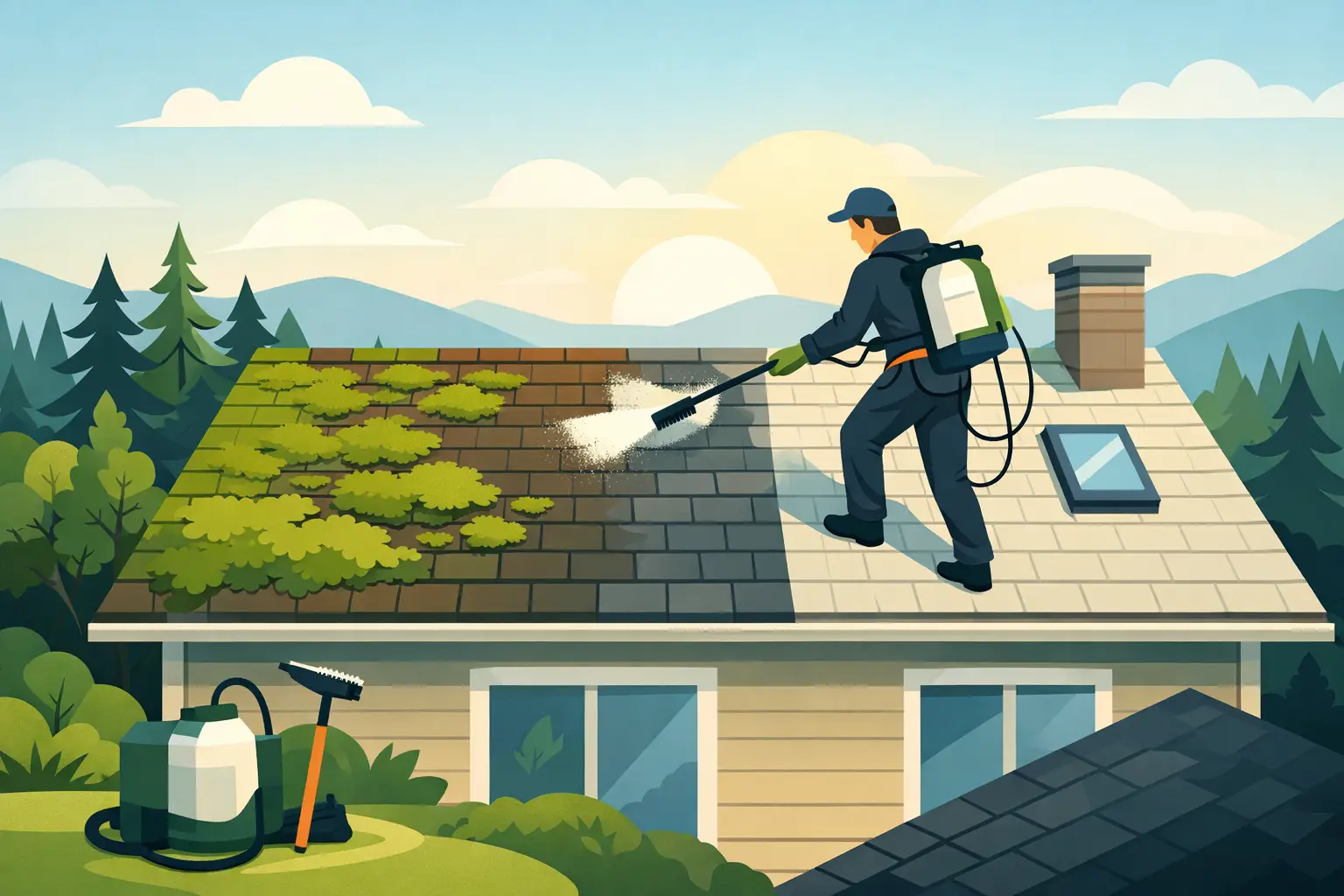
Moss on an Oregon roof is more than a cosmetic problem. In Roseburg, Coos Bay, and throughout Coos and Douglas Counties, steady rain, shade, and damp seasons give moss the conditions it needs to spread. Professional roof moss treatment services help stop that growth before it holds moisture against the roof surface, works into seams, and creates avoidable repair concerns.
A roof can look solid from the ground while moss is quietly causing trouble at the edges, around penetrations, and in areas where water drains slowly. The right treatment is not about making a roof look clean for a few weeks. It is about protecting the roof system and helping it do its job through another wet season.
Why Moss Is Hard on Oregon Roofs
Moss is a living plant that absorbs and retains water. When it builds up on a roof, it can keep the surface damp long after rain has stopped. That added moisture is a concern on many roofing materials, particularly where the roof already has worn seams, aged coatings, exposed fasteners, or drainage issues.
On shingle roofs, moss can grow beneath shingle edges and interfere with proper water shedding. On flat and low-slope roofs, it may collect around drains, scuppers, seams, and changes in elevation. Those areas need to move water freely. When debris and moss hold water in place, minor weaknesses can become larger maintenance problems.
Moss also catches leaves, needles, and windblown debris. What begins as a small green patch can turn into a wet, compacted layer that blocks drainage paths. For commercial properties and manufactured homes with low-slope roofs, keeping drains and roof edges clear is especially important because standing water puts added stress on the roof system.
The damage does not always happen overnight. It is usually gradual, which is why waiting until a leak appears is rarely the best plan. A leak may be the first visible sign, but moisture may have already been working on the roof surface for some time.
What Roof Moss Treatment Services Should Include
Effective roof moss treatment services begin with an inspection, not a one-size-fits-all cleaning method. A contractor should identify the roof type, its age and condition, how water drains, and where moss is growing. The right approach for an older residential shingle roof is not necessarily the right approach for a commercial flat roof.
The work generally includes removing loose debris, addressing moss growth with an appropriate treatment, and checking the roof for areas that need repair or closer attention. Moss should not simply be scraped aggressively from the roof. Harsh scraping or high-pressure washing can damage roofing materials, loosen protective granules, disturb seams, or force water where it does not belong.
A careful treatment allows the growth to release over time while protecting the roof surface. Some moss may not disappear the same day, especially when it has built up heavily. That is normal. The goal is to kill and control the growth without shortening the life of the roofing material.
For flat roofs, treatment should also include a close look at drainage. If water regularly ponds in one area, moss treatment alone will not solve the underlying issue. The roof may need drain cleaning, a repair at a seam, improved slope in a problem area, or a maintenance plan that keeps debris from returning.
Treatment Is Not a Substitute for Repair
Moss treatment can protect a roof that is still serviceable, but it cannot repair a failing roof system. If an inspection finds open seams, deteriorated flashing, soft areas, split membrane material, or active leaks, those issues should be handled directly.
This distinction matters for property owners trying to control costs. Treating moss early may help avoid premature wear. Treating a roof that already has unresolved damage can leave the real problem in place. A straightforward inspection helps determine whether cleaning and treatment are enough or whether repairs should come first.
When to Schedule Moss Treatment
Most property owners call when moss becomes obvious from the ground, but that is not the only time to schedule service. A yearly roof check is a practical choice for homes and buildings surrounded by trees or located in consistently shaded areas. Properties near the coast often need closer attention because of the prolonged damp conditions common in the region.
Fall is a useful time to remove leaves and prepare drainage areas for winter rain. Spring is also a good time to assess how the roof handled the wet season and whether moss has expanded. The best timing depends on the roof, tree cover, and the amount of moisture the property receives.
You may want to schedule an inspection sooner if you notice green growth at roof edges, black staining, backed-up gutters, debris around roof drains, water ponding on a flat roof, or damp spots inside the building. These signs do not always mean the roof is leaking, but they are worth checking before the next heavy rain.
Moss Control for Flat Roofs and Manufactured Homes
Flat and low-slope roofing requires a different level of attention than a steep roof. Water moves more slowly, and even a small obstruction can affect drainage. Moss, leaves, and sediment can collect near scuppers or drains, creating a wet area that stays wet longer than it should.
Manufactured home roofs can have similar concerns. Many have low-slope systems that need regular maintenance to prevent debris buildup and water intrusion. Because these roofs are often easier to access, owners may be tempted to handle cleaning themselves. However, walking on the wrong areas, using the wrong cleaning product, or applying too much pressure can create damage that costs more than professional maintenance.
A qualified roofing contractor can assess whether the roof needs treatment, drain cleaning, coating maintenance, seam repair, or a combination of services. That practical approach is more valuable than treating every roof as if it has the same needs.
Protecting the Roof After Treatment
Moss will return if the conditions that support it remain unchanged. Treatment is an important first step, but ongoing maintenance gives it lasting value. Keeping gutters, drains, valleys, and roof edges free of debris helps water leave the roof as intended.
Tree trimming can also make a difference when branches keep the roof shaded or drop heavy amounts of leaves and needles. Not every tree needs to be removed. Often, selective trimming improves sunlight and airflow without changing the character of the property.
Property managers should consider adding roof inspections to their regular maintenance schedule, especially for buildings with flat roofs. A small service visit to clear drains and spot early seam issues can be far less disruptive than an emergency call after water enters an occupied building.
For homeowners, the same principle applies. A roof is easier and less expensive to maintain when issues are addressed while they are small. Moss treatment works best as part of basic roof care, alongside inspections and repairs when needed.
Choose a Contractor Who Looks Beyond the Moss
The visible moss is only one part of the job. A dependable contractor looks at the roof beneath it and considers the conditions that caused the growth in the first place. That includes roof age, drainage, material condition, tree cover, and signs of water intrusion.
Rich Rayburn Roofing provides practical roof maintenance and moss treatment for local property owners who want clear answers about their roof condition. Whether the property has a residential roof, manufactured home roof, or commercial flat roof, the work should be handled with care for the system already in place.
If moss is spreading across your roof, do not wait for it to become a larger moisture problem. A professional inspection can show what the roof needs now and help you make a sensible plan for keeping it in good working condition.