

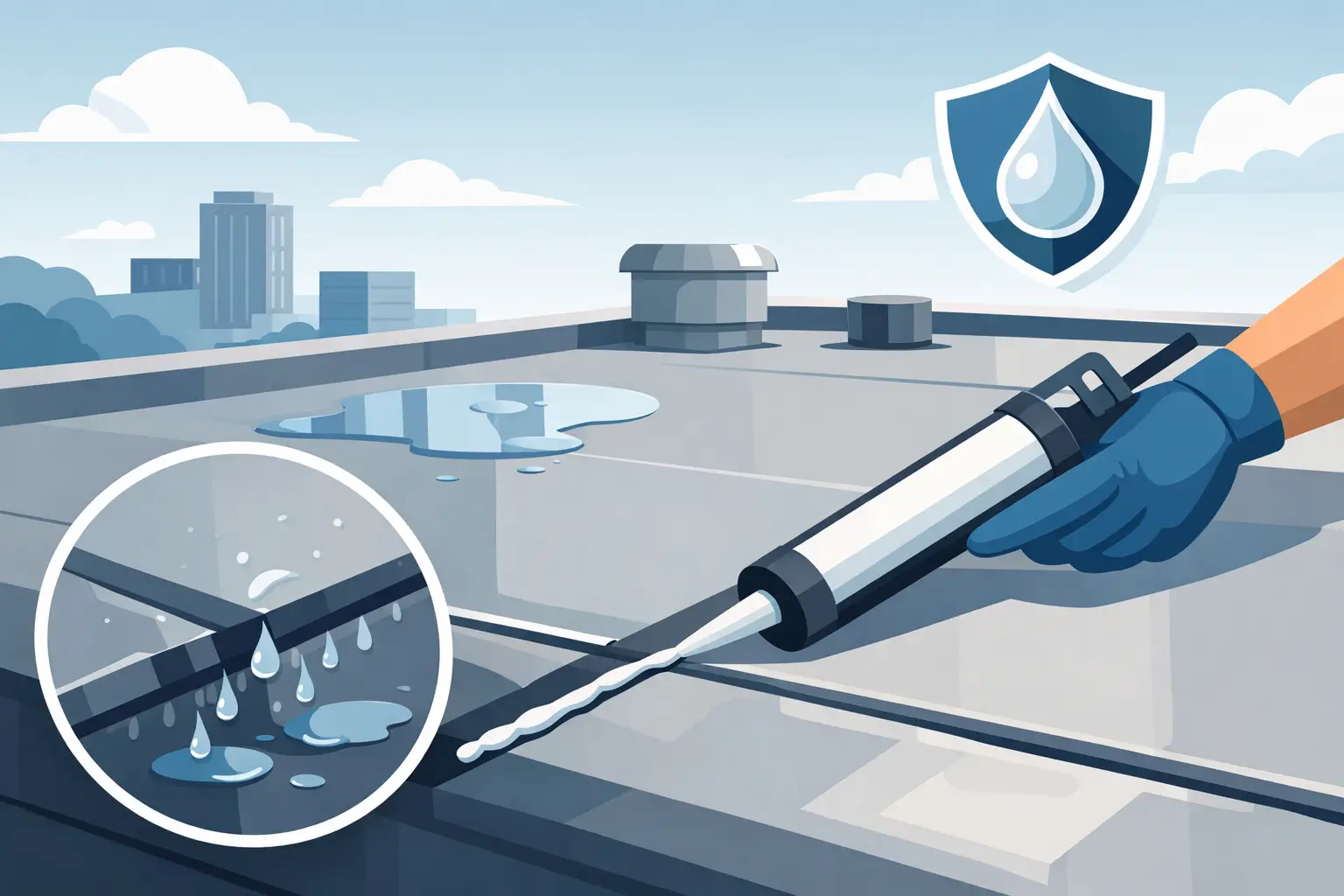
A flat roof can look sound from the ground while its seams are slowly taking on water. The membrane itself may have years of service left, but a loose edge, split lap, or failed patch can create a direct path for moisture. Knowing how to protect flat roof seams gives homeowners and property managers a better chance of stopping small issues before they become interior leaks, damaged insulation, or costly roof replacement.
For properties in Roseburg, Coos Bay, and throughout Coos and Douglas Counties, rain, wind-driven debris, standing water, and moss growth all place added demands on flat roofing systems. Seam protection is not a one-time treatment. It is a maintenance practice built around keeping the roof clean, moving water off the surface, and repairing defects while they are still manageable.
Why Flat Roof Seams Need Extra Attention
Most flat roofs are installed in sections. Whether the system uses modified bitumen, TPO, PVC, EPDM, built-up roofing, or another membrane, the places where materials overlap or join are critical. Those seams must remain fully adhered, sealed, and supported by a dry, stable roof surface.
Age is one cause of seam failure, but it is not the only one. Repeated expansion and contraction can stress a membrane as temperatures change. Ponding water can work on weak areas for days after a storm. Wind can catch a lifted edge and pull it farther open. Foot traffic from HVAC service, tree limbs, and debris can also damage seams that were properly installed.
A seam problem does not always produce an immediate drip indoors. Water can travel beneath the membrane, saturate insulation, or collect around roof penetrations before it becomes visible inside. That is why regular roof checks matter even when the building appears dry.
How to Protect Flat Roof Seams Through Routine Inspections
The most useful inspection is one done before a leak. Check a flat roof at least twice each year, ideally in spring and fall, and again after heavy rain, high winds, or a storm that drops branches across the roof. Commercial property managers should also inspect after work crews access rooftop equipment.
Walk the roof only when it is safe and only where the roofing system can handle foot traffic. Look closely at seam lines, perimeter edges, roof drains, scuppers, pipe flashings, skylights, and equipment curbs. These areas see more movement and are common places for water to enter.
Warning signs include open laps, wrinkled membrane material, bubbling, cracked seam coating, loose tape, exposed fabric, and patches that have begun to curl around the edges. Dark staining, soft areas, or dirt lines around a seam can indicate that water is sitting or moving where it should not. Inside the building, ceiling stains, musty odors, and damp insulation are reasons to schedule a professional roof evaluation promptly.
Take photos of anything that looks questionable and note its location. A simple record helps show whether a small defect is changing over time and gives a roofing contractor a clearer starting point when repairs are needed.
Keep Water, Debris, and Moss Off the Roof
Flat roofing depends on drainage. Even a low-slope roof should guide water toward drains, scuppers, gutters, or designated edges. When leaves, needles, mud, or moss block those routes, water remains on the roof longer and places greater strain on seams.
Clear loose debris from the roof surface and drainage points on a regular schedule. Do not use sharp tools that can gouge the membrane, and avoid pressure washing unless a roofing professional confirms it is appropriate for the specific system. High-pressure water can force its way beneath a weak lap or damage older materials.
Moss deserves special attention on Oregon roofs. It holds moisture against the surface and can hide seam damage from view. A moss treatment suited to the roof membrane can help control growth, but the wrong cleaner may harm the roofing material or nearby landscaping. A contractor experienced with flat roofs can identify a treatment method that cleans the surface without shortening the membrane’s life.
If water regularly ponds in the same place for more than 48 hours after dry weather returns, do not treat it as a normal flat-roof condition. The cause may be clogged drainage, a settled area, compressed insulation, or an installation issue. Cleaning the drain may solve it, but recurring ponding often needs a closer assessment.
Repair Small Seam Defects With Compatible Materials
It is tempting to cover a questionable seam with hardware-store caulk or roof cement. That approach can create a larger repair later. Flat roofing materials are system-specific. A coating, adhesive, tape, or patch that works on one membrane may not bond properly to another, may react with it, or may conceal moisture below the surface.
A lasting repair starts with identifying the roofing material and finding out whether the seam is dry. The area may need cleaning, priming, heat welding, manufacturer-approved tape, liquid flashing, or a reinforced patch. The repair must extend beyond the visible split and be pressed or welded correctly around its full perimeter.
For example, TPO and PVC seams are commonly heat-welded, while EPDM often uses specialized primer and seam tape. Modified bitumen repairs may call for compatible membrane patches and flashing materials. These methods are not interchangeable. When the roof type is uncertain or the seam has pulled back more than a few inches, professional repair is the safer choice.
Temporary emergency protection can be appropriate during active rain, but it should remain temporary. A tarp or emergency patch may limit water entry until conditions allow proper work. It should not replace an inspection and permanent repair after the weather clears.
Protect Seams From Foot Traffic and Rooftop Work
Many seam failures begin after service work, not after a storm. Technicians may need to reach an air conditioner, vent, satellite equipment, or solar component, and repeated walking in the same path can scuff or stretch the membrane. Tools, ladders, and dropped fasteners can do the same.
Set clear access routes for anyone who works on the roof. Walk pads can protect membrane areas that receive regular traffic, especially around rooftop units and access doors. Equipment service contractors should know where seams, drains, and vulnerable flashings are located before beginning work.
Avoid adding new rooftop equipment without reviewing the roof system first. New curbs, brackets, conduit supports, and penetrations create additional waterproofing points. Every penetration should be correctly flashed and tied into the existing membrane by someone qualified to work with that roofing material.
Know When Seam Repairs Are Not Enough
A few isolated seam defects on an otherwise sound roof can often be repaired efficiently. The decision changes when seams are opening across several roof sections, the membrane is brittle, insulation is wet, or repairs are becoming frequent. Recoating or recovering may be an option in some cases, but only after the roof structure and existing materials are evaluated.
Property owners should also consider the roof’s history. A roof with repeated leaks in different locations may have a broader drainage or installation problem. Adding more sealant to each new spot can delay the real decision while water continues to work below the surface.
An experienced flat roofing contractor can determine whether targeted repairs, maintenance work, a coating system, or replacement makes the most financial sense. Rich Rayburn Roofing serves local residential, manufactured home, and commercial customers with practical flat roof repair and maintenance recommendations based on the actual condition of the roof.
A good seam repair is easier and less expensive when it is found early. Keep the roof clean, watch the drainage after storms, and act when a seam first shows separation. That steady attention protects more than the roofing membrane – it helps protect the building, its contents, and the people relying on it.