

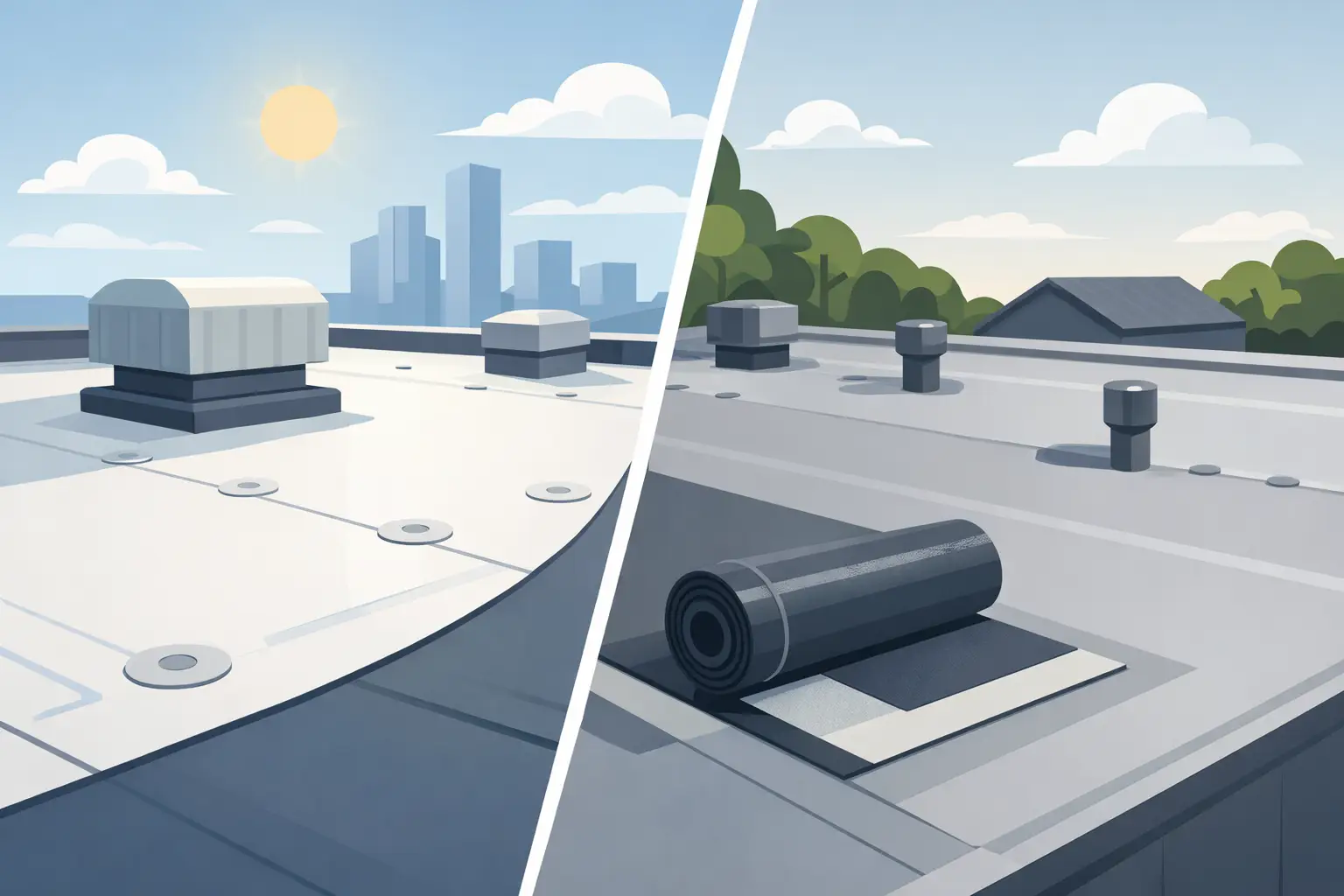
A flat roof that looks fine from the ground can still be working hard against standing water, wind, sun, and debris. When it is time to replace that roof, TPO versus PVC roofing is one of the most common decisions property owners face. Both are proven single-ply systems, but they are not interchangeable. The better choice depends on what is happening on your roof, how the building is used, and how long you expect the system to perform.
For homeowners, manufactured home owners, and commercial property managers in Douglas and Coos County, the right answer often comes down to more than the price per square foot. Roof drainage, rooftop equipment, grease exposure, foot traffic, and the quality of installation all matter.
TPO Versus PVC Roofing at a Glance
TPO and PVC are white, heat-welded membrane roofing systems commonly used on low-slope and flat roofs. Both can reflect sunlight, help manage roof temperatures, and create watertight seams when installed correctly. Each is available in different thicknesses and can be installed with insulation, cover boards, and attachment methods suited to the building.
TPO stands for thermoplastic polyolefin. It is widely used because it offers solid performance at a competitive cost. PVC stands for polyvinyl chloride. It has a longer track record in certain demanding commercial applications, especially where chemicals, oils, or restaurant grease are present.
The visual difference is not always obvious after installation. The practical difference shows up in the roof’s environment, details, maintenance needs, and expected service life.
How TPO Roofing Performs
TPO is a practical choice for many residential and commercial flat roofs. It is typically white or light colored, which helps reflect heat and can reduce heat buildup at the roof surface during dry, sunny weather. For property owners replacing an aging built-up roof or worn membrane, TPO often provides a good balance of cost and performance.
Its seams are heat welded rather than glued or taped. Properly welded seams are a major advantage because they form a continuous bond that is often stronger than the membrane itself. That does not mean every seam is automatically dependable. Temperature, welding speed, surface preparation, and installer experience make a real difference. A good roofing crew tests seams as work progresses instead of assuming they are sound.
TPO performs well on roofs without unusual chemical exposure. It is commonly used on offices, retail buildings, warehouses, garages, and homes with low-slope roof sections. It can also work well on manufactured homes when the existing roof structure, drainage, and insulation plan are properly evaluated.
The main reason owners choose TPO is value. Material and installation costs are often lower than PVC, though pricing varies with membrane thickness, roof access, tear-off requirements, insulation, and flashing details. A less expensive system can be the right investment when it fits the building and is installed carefully.
Where TPO needs closer attention
Not all TPO membranes are the same. Formulations and manufacturing quality have improved over the years, but product quality still varies by manufacturer and membrane thickness. A thin membrane may cost less up front, yet it can be less forgiving around equipment, walk paths, and sharp details.
TPO also deserves careful consideration where grease, oils, or chemical contaminants regularly reach the roof. A restaurant exhaust area, industrial process vent, or frequent chemical discharge may call for a different material. This is where PVC often has a clear advantage.
How PVC Roofing Performs
PVC roofing is also a heat-welded, single-ply membrane, but its material properties make it especially useful in harsher commercial environments. It has a long history on roofs exposed to animal fats, cooking oils, grease, and many industrial chemicals. For restaurants, food-service facilities, and buildings with grease-producing exhaust systems, PVC can be a better fit than TPO.
Like TPO, PVC offers reflective surface options and welded seams. It is flexible and performs well around penetrations, drains, curbs, parapet walls, and other areas where flat roofs commonly develop leaks. The membrane’s chemical resistance can protect the roof when rooftop conditions are more demanding than normal rain and sunlight.
PVC generally costs more than TPO. That added cost may be justified when the roof has kitchen exhausts or other exposure that could shorten the life of a less suitable membrane. Spending less on the initial installation does not help if the system is not designed for the conditions it will face every day.
When PVC may be more than you need
For a straightforward low-slope roof with no grease or chemical exposure, PVC may not provide enough additional benefit to justify the higher cost. A well-installed TPO system can be a dependable choice for many properties. The goal is not to choose the premium material by default. It is to choose the material that matches the roof’s actual demands.
Cost Is More Than the Membrane Price
When comparing estimates, do not focus only on whether the proposal says TPO or PVC. The full roofing assembly determines much of the job’s cost and long-term performance. A membrane is only one part of the system.
A complete estimate should account for the condition of the existing roof deck, removal of old material when needed, insulation thickness, tapered insulation for drainage, cover board, perimeter fastening, flashing, pipe boots, drains, scuppers, and edge metal. A roof with ponding water may need drainage corrections before any new membrane can perform as intended.
Labor also matters. Heat-welded roofing demands trained installation. Poorly flashed penetrations and weak seams can cause leaks regardless of whether the roof is TPO or PVC. Smaller, experienced crews can often provide closer quality control and efficient production without adding unnecessary overhead to the job.
Oregon Weather and Your Flat Roof
In western Oregon, rain management deserves special attention. TPO and PVC both resist water, but neither system is a substitute for proper slope and clear drainage. Water that stays on a flat roof for long periods increases stress on seams, flashings, and low areas. It also makes minor defects harder to find before they become interior leaks.
Moss, leaves, needles, and coastal debris can block drains and scuppers. Regular roof checks are especially worthwhile after heavy storms and through the wet season. A maintenance visit can catch loose edge metal, damaged sealant, blocked drains, and early membrane damage before emergency repairs are needed.
Wind exposure is another consideration, particularly near the coast and on taller commercial buildings. The attachment method, perimeter details, and corner zones should be designed for the building’s conditions. A membrane choice is only part of a roof system built to stay in place.
Choosing Between TPO and PVC
TPO is often the sensible choice when budget matters, the roof has ordinary exposure, and the project calls for a dependable reflective membrane. PVC is often worth the higher initial cost when grease, oils, chemicals, or demanding rooftop conditions are part of the picture.
The decision can also change based on roof size. On a small residential flat roof, material cost differences may be modest compared with the cost of flashing, tear-off, and detail work. On a large commercial roof, the membrane price difference can be significant, making it even more important to match the material to the building’s use.
Before choosing either system, have the roof inspected for drainage problems, wet insulation, deck damage, old flashing failures, and rooftop sources of contamination. A contractor should be able to explain why a particular membrane, thickness, insulation package, and attachment method make sense for your property – in plain language.
The Installation Details That Protect Your Investment
The best membrane cannot overcome poor workmanship. Flashings at walls, skylights, pipes, HVAC curbs, and drains are where flat roofs need the most care. These areas move, collect water, and see more stress than wide open roof fields.
Ask how seams will be tested, how drains will be handled, and whether walk pads are needed around service equipment. If technicians regularly access HVAC units, designated walk paths protect the membrane from repeated foot traffic. If the roof has ponding water, ask whether tapered insulation or drainage improvements should be included rather than simply covering the problem.
A roof replacement should leave the building with a system that is serviceable as well as watertight. Clear access to drains, properly detailed penetrations, and a plan for periodic maintenance make future repairs easier and help extend the roof’s working life.
A good flat roof decision starts with an honest look at the building, not a one-size-fits-all recommendation. Whether TPO or PVC is the better fit, the value comes from a system designed for your roof and installed by craftsmen who pay attention to the details that keep water out.