
A green roof may look like a normal part of life in Douglas and Coos County, but moss is not harmless. It holds moisture against roofing materials, blocks drainage, and can shorten the life of a roof when left in place. Knowing how to remove roof moss safely starts with protecting the roof surface, not just getting rid of what you can see.
Moss is especially common on shaded roofs, under overhanging trees, and anywhere wet weather keeps the roof from drying. Oregon’s rain and mild temperatures give moss the conditions it needs to spread. The right approach depends on whether you have asphalt shingles, a low-slope roof, a manufactured home roof, or a commercial flat roofing system.
Why Roof Moss Needs Careful Removal
Moss acts like a wet sponge. It absorbs rainwater and keeps it against shingles, seams, flashing, and roof edges long after the weather has cleared. On shingle roofs, established moss can lift shingle edges and allow water to work underneath. On low-slope and flat roofs, it can trap leaves and grit near drains, causing standing water that puts added stress on the roofing system.
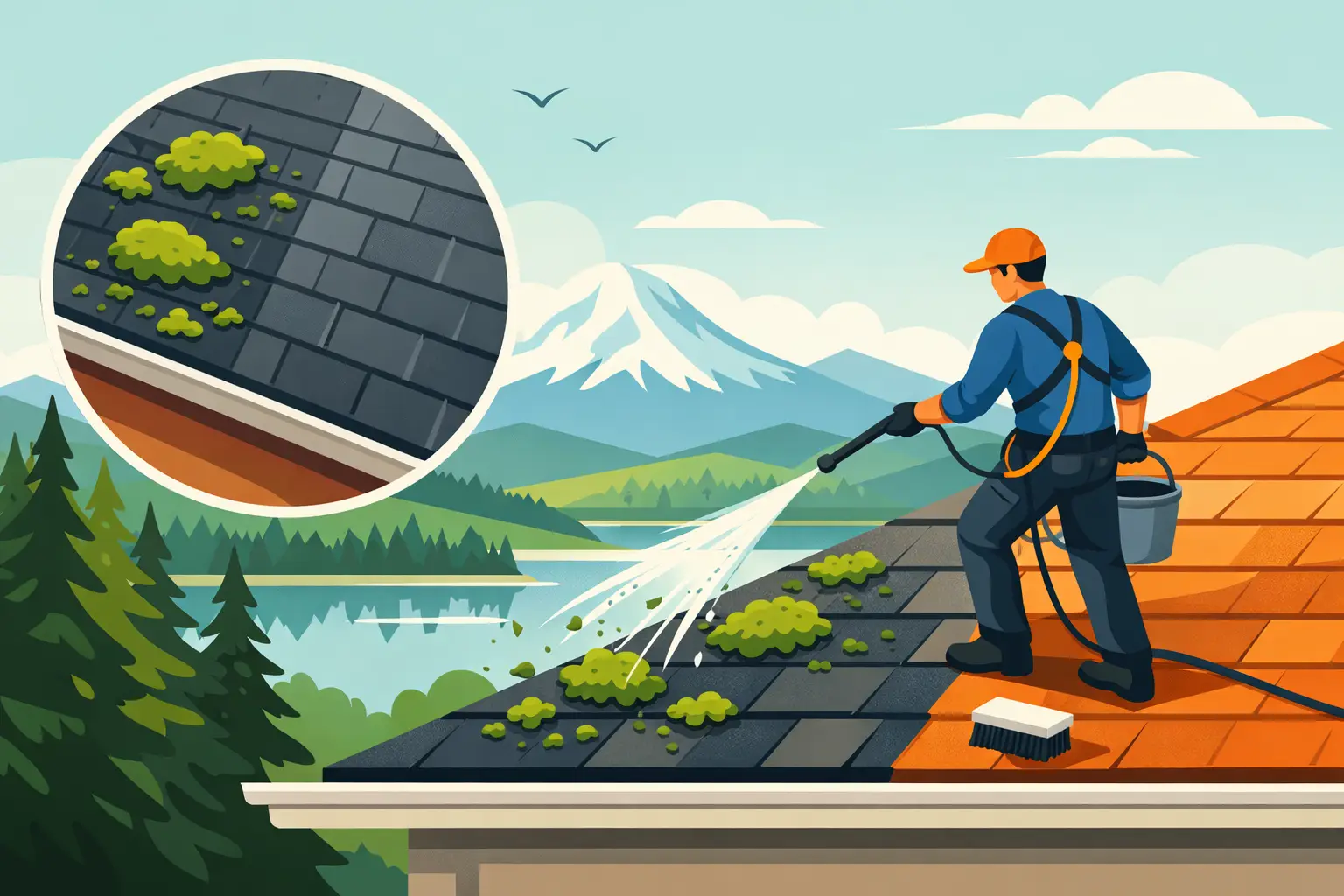
The biggest mistake is treating moss removal as a cleaning job alone. Aggressive cleaning can do more damage than the moss. Pressure washing strips protective granules from shingles, can force water beneath roofing materials, and may damage older membranes or seams. Scraping with a stiff wire brush creates the same problem.
The goal is to kill the moss, remove loose growth gently, and correct the conditions that helped it take hold.
Start With a Safe Roof Assessment
Before carrying tools up a ladder, inspect the roof from the ground. Look for heavy moss mats, curled or missing shingles, soft-looking areas, clogged gutters, loose flashing, and branches rubbing the roof. If moss has grown thick enough to hide the roof surface, there may be damage underneath that cannot be judged from the ground.
Choose a dry, calm day. A roof that looks dry can still be slick where moss is present, and chemical treatments can make walking surfaces more hazardous. Do not work during rain, high winds, freezing weather, or when the roof is wet from morning dew.
Ladder safety matters as much as roof safety. Set the ladder on firm, level ground, extend it above the roof edge, and secure it where possible. Wear non-slip footwear, gloves, eye protection, and clothing that covers your arms and legs. If the roof is steep, high, fragile, or difficult to access, the safest decision is to stay off it and have a roofing professional inspect it.
How to Remove Roof Moss Safely From Shingles
For most shingle roofs, a moss treatment followed by patience is safer than hard scrubbing. Start by removing loose leaves, twigs, and debris from valleys, gutters, and roof edges. Use your hands, a leaf blower from a secure position, or a soft tool that will not tear or scrape the shingles.
Apply a roof-safe moss treatment according to the product directions. Use only a treatment approved for the type of roof you have. The solution should be applied carefully enough to wet the moss without soaking the roof, siding, windows, landscaping, or nearby outdoor surfaces.
Avoid ordinary household bleach mixes unless the roofing manufacturer specifically allows them and you understand the required dilution and runoff precautions. Strong bleach can discolor roofing materials, harm plants, corrode metal components, and create a hazard for the person applying it. A roofing-specific moss control product is generally the more controlled option.
Once the treatment has done its work, much of the moss will loosen and weather away over time. This may take several weeks, especially during dry weather. Do not force the process with a pressure washer. If dead moss remains in small patches, use a soft-bristle brush very gently and brush downward with the shingle direction. Never brush upward against the tabs, and stop if granules begin coming loose.
Protect the landscaping below before treatment begins. Cover sensitive plants when appropriate, wet them before and after application, and rinse any overspray promptly. Keep runoff out of ponds and avoid applying treatment just before a heavy rain.
Flat and Low-Slope Roofs Need a Different Approach
Moss removal on flat roofing requires extra caution because drainage is part of the roofing system. Walking in the wrong place, dragging tools across the surface, or using a chemical that is incompatible with the membrane can cause damage that may not be visible right away.
First, identify the roof material if possible. Built-up roofing, modified bitumen, PVC, TPO, metal, and coated roof systems do not all respond the same way to cleaners and treatments. If you do not know the material, do not guess. A treatment that is acceptable for shingles may not be suitable for a membrane roof.
Remove loose organic debris around drains, scuppers, gutters, and seams without digging into the roofing surface. Standing water is a warning sign. Moss may be part of the problem, but poor drainage, a blocked drain, damaged flashing, or a low area in the roof can be the real cause.
Do not use pressure washers, wire brushes, or sharp scrapers on a flat roof. They can break the surface coating, open seams, or damage the membrane. If moss is widespread, if water remains on the roof for more than a short period after rain, or if seams appear loose, schedule an inspection rather than attempting a broad cleanup yourself.
Do Not Ignore What Moss May Be Hiding
Removing moss is useful maintenance, but it will not repair roof damage already in place. As you work, watch for signs that the roof needs professional attention: exposed shingle nails, lifted tabs, cracked sealant, split seams, soft decking, rusted flashing, interior water stains, or granules collecting in gutters.
Moss near a chimney, skylight, vent pipe, roof-to-wall transition, or drain deserves particular attention. These are common leak points even on a well-maintained roof. If growth is concentrated there, moisture may be lingering because the flashing or drainage path needs repair.
Older roofs can be especially vulnerable. A few light patches on a newer roof may be a maintenance issue. Heavy growth on a roof near the end of its service life may be a sign that cleaning is no longer the best investment. An honest inspection can help separate a manageable moss treatment from a roof repair or replacement need.
Keep Moss From Coming Back
The best long-term moss control is helping the roof dry faster after rain. Trim back branches that shade the roof or drop needles and leaves into valleys and gutters. Keep gutters and downspouts clear so water has a direct path off the roof. Remove roof debris at least seasonally, and more often when the property sits beneath fir trees or heavy leaf cover.
Some roofs benefit from preventive treatments applied on a regular schedule, but the timing depends on the roof material, its age, nearby vegetation, and local weather exposure. Zinc or copper strips are sometimes used on certain sloped roofs to discourage moss growth as rainwater washes over them. They are not a universal solution, and installation should not involve driving fasteners through roofing that is otherwise sound.
For commercial buildings, manufactured homes, and homes with low-slope sections, regular maintenance should include checking drains, scuppers, seams, flashing, and areas where debris collects. A clear drain can prevent far more trouble than a cosmetic moss cleanup.
When to Call a Roofing Professional
Call for an inspection when moss is thick, the roof is steep or hard to access, or you see signs of leakage or material damage. The same is true when a flat roof holds water, a membrane surface looks worn, or moss keeps returning in the same area after cleaning.
Rich Rayburn Roofing works with property owners throughout Roseburg, Coos Bay, Coos County, and Douglas County on roof maintenance, moss treatment, repairs, and flat roofing concerns. An experienced roofer can identify whether moss is a surface issue or a sign of drainage, flashing, or roofing material failure.
A careful moss treatment can extend the useful life of a sound roof. The safest result comes from working gently, keeping water moving off the roof, and treating any hidden damage before the next Oregon rainy season puts it to the test.