
If you own a flat or low-slope building on the Oregon coast or inland in Douglas County, you already know the real question is not what looks best from the street. It is what holds up to rain, standing water, wind, and years of use without turning into a repair problem. That is where an EPDM roofing review matters. For many property owners, EPDM is a practical option because it is built for weather exposure and long-term service, but it is not the right fit for every roof.
EPDM roofing review: what it is and why owners choose it
EPDM is a synthetic rubber roofing membrane used on flat and low-slope roofs. It has been around for decades, which matters. Roofing materials earn their reputation over time, not in a sales brochure.
Most owners choose EPDM for simple reasons. It is proven, widely used, and usually more cost-effective than some other single-ply systems. It also performs well in wet climates when it is installed correctly. On residential flat roofs, manufactured homes, and commercial buildings, that reliability is a big part of its appeal.
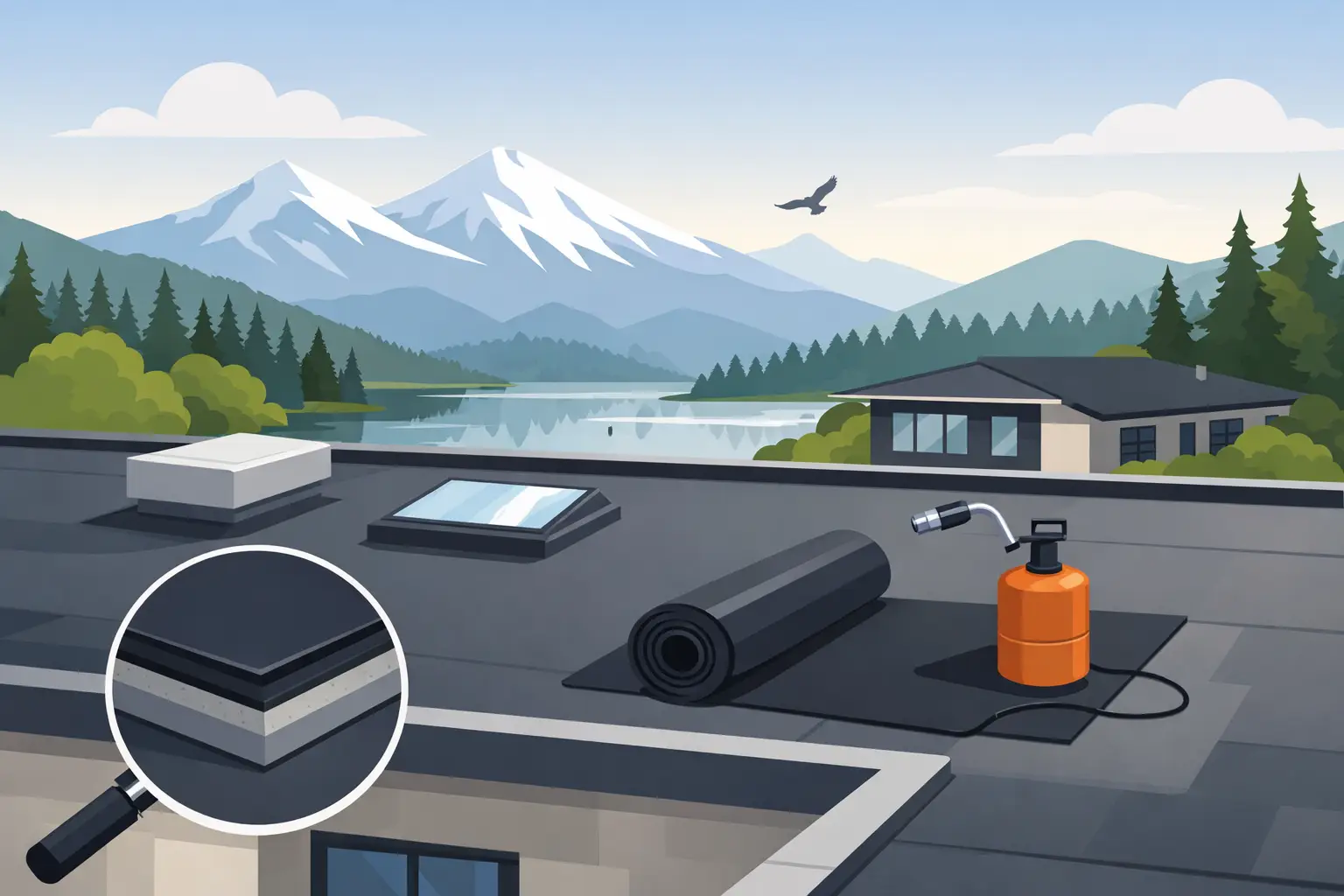
The membrane is typically black, though lighter options exist. It can be installed in large sheets, which helps reduce the number of seams compared to built-up systems. Fewer seams can mean fewer weak points, especially on bigger roof areas.
Where EPDM performs well
EPDM tends to perform best on low-slope roofs where the roof design is straightforward and the drainage is decent. It is a strong match for many commercial buildings, garages, additions, porches, carports, and manufactured homes. It is especially useful when the goal is dependable waterproofing without paying for a more specialized system than the building really needs.
In western Oregon, consistent moisture is a fact of life. A roofing system has to handle repeated wetting, seasonal debris, and periods where water does not run off as quickly as it would on a steep roof. EPDM has a long track record in those conditions. That does not mean it is maintenance-free, but it does mean it is a material many contractors trust when installed over the right substrate and paired with proper flashing details.
It is also worth noting that EPDM stays flexible. That flexibility helps the membrane handle normal expansion and contraction as temperatures change. On roofs that move a little over time, that can be an advantage.
The main advantages in a real-world EPDM roofing review
The biggest strength of EPDM is durability. A well-installed EPDM roof can last 20 to 30 years, and sometimes longer with good maintenance. That lifespan depends on membrane thickness, roof design, installation quality, and how quickly small issues are repaired.
Cost is another reason EPDM remains popular. In many cases, it comes in at a lower price point than PVC or some other flat roofing materials. For owners balancing budget and service life, that matters. A roof does not have to be the most expensive option to be the right one.
Repairability is also a plus. When damage does happen, EPDM can often be patched without tearing into large sections of the roof. That is helpful for property managers and homeowners who want practical repair options rather than a full replacement every time a leak shows up.
EPDM also handles weathering well. Sun exposure, rain, and temperature swings can wear down any roofing system, but EPDM has a reputation for aging predictably. It is not flashy, but it is steady, and that is often what matters most on a working roof.
The drawbacks you should know before choosing EPDM
A fair EPDM roofing review has to include the trade-offs. The first is appearance. EPDM is a functional roofing material, not a decorative one. On most flat roofs that is not a concern, but if the roof is visible from upper windows or nearby buildings, some owners prefer a cleaner-looking membrane system.
Seams can also be a vulnerability. Even though EPDM often uses large sheets, the seams that do exist have to be done right. Poor seam work is one of the most common reasons flat roofs fail early. Material quality matters, but workmanship matters more.
Puncture resistance is another point to consider. EPDM is durable, but it can be damaged by sharp tools, heavy foot traffic, or neglected rooftop equipment. If service people regularly walk the roof, added protection may be needed in those areas.
The black surface can absorb heat. In cooler climates that may not be a major drawback, but on some buildings it can still affect indoor comfort and energy performance. Whether that matters depends on insulation levels, building use, and local exposure.
EPDM roofing review vs other flat roof systems
Compared with TPO, EPDM is often viewed as the more established material with a longer field history. TPO can offer heat-reflective benefits, but product quality has varied over the years depending on manufacturer and formulation. EPDM wins points for long-term familiarity and a proven track record.
Compared with PVC, EPDM is usually less expensive. PVC can be a strong choice where chemical resistance or grease exposure matters, such as certain restaurants or industrial settings. For a standard residential or commercial flat roof without those demands, EPDM is often the more economical solution.
Compared with torch-down or modified bitumen, EPDM can offer simpler installation and fewer layers. Modified systems can still be a good fit in some cases, especially when a roof needs extra toughness under foot traffic, but they may involve more seams and more labor.
This is where the answer often becomes it depends. The best roofing system is not just about the material itself. It depends on the building, drainage, insulation, budget, expected lifespan, and who is doing the installation.
What makes an EPDM roof last
Installation quality is the first factor. A good membrane installed over a bad surface or finished with weak flashing details will not perform like it should. Penetrations, edges, drains, and transitions are the areas that deserve the most attention because that is where many leaks begin.
Roof design is next. If a flat roof has poor drainage, trapped debris, or long-term ponding water, the roofing material is forced to work harder. EPDM can tolerate a lot, but no roofing system benefits from standing water year after year.
Maintenance also matters more than many owners expect. Flat roofs should be inspected, especially after storms or after other trades have been on the roof. A small puncture or open seam caught early is much less expensive than water damage that goes unnoticed.
For property owners in Roseburg, Coos Bay, Coos County, and Douglas County, moss and debris management can also be part of the equation. Keeping drains and roof surfaces clear helps extend the service life of any low-slope system.
When EPDM is a smart choice
EPDM is a smart choice when you want a proven flat roofing material, need reliable waterproofing, and want to keep costs reasonable. It fits well on many homes, manufactured homes, and commercial buildings where function and longevity matter more than appearance.
It also makes sense when the roof layout is fairly clean and the contractor installing it has real experience with flat roofing. That last part is important. A lot of roof problems blamed on material are actually installation problems.
For owners who value straightforward performance over trend-driven products, EPDM is often a dependable answer. Rich Rayburn Roofing has worked with flat roofing systems long enough to know that the right material is only part of the job. Proper prep, careful seam work, and solid flashing details are what turn a good product into a roof that lasts.
When you may want to consider something else
If energy efficiency is your top concern and the building gets heavy sun exposure, a reflective membrane may deserve a closer look. If the roof sees constant foot traffic or supports equipment that requires regular access, another system or added walkway protection may be the better route.
If the roof has complex shapes, lots of penetrations, or chronic drainage problems, the conversation should go beyond membrane type and focus on the roof assembly as a whole. Sometimes the best investment is correcting the design issue first instead of expecting any membrane to overcome it.
That is the real value of an honest review. EPDM is a solid roofing material, but it is not magic. It works best when the building is a good candidate and the installation is done by a contractor who understands flat roofing, not just roofing in general.
A good roof should give you confidence when the weather turns bad, not a reason to keep checking the ceiling. If EPDM fits your building, it can be one of the most practical flat roofing choices you can make.