

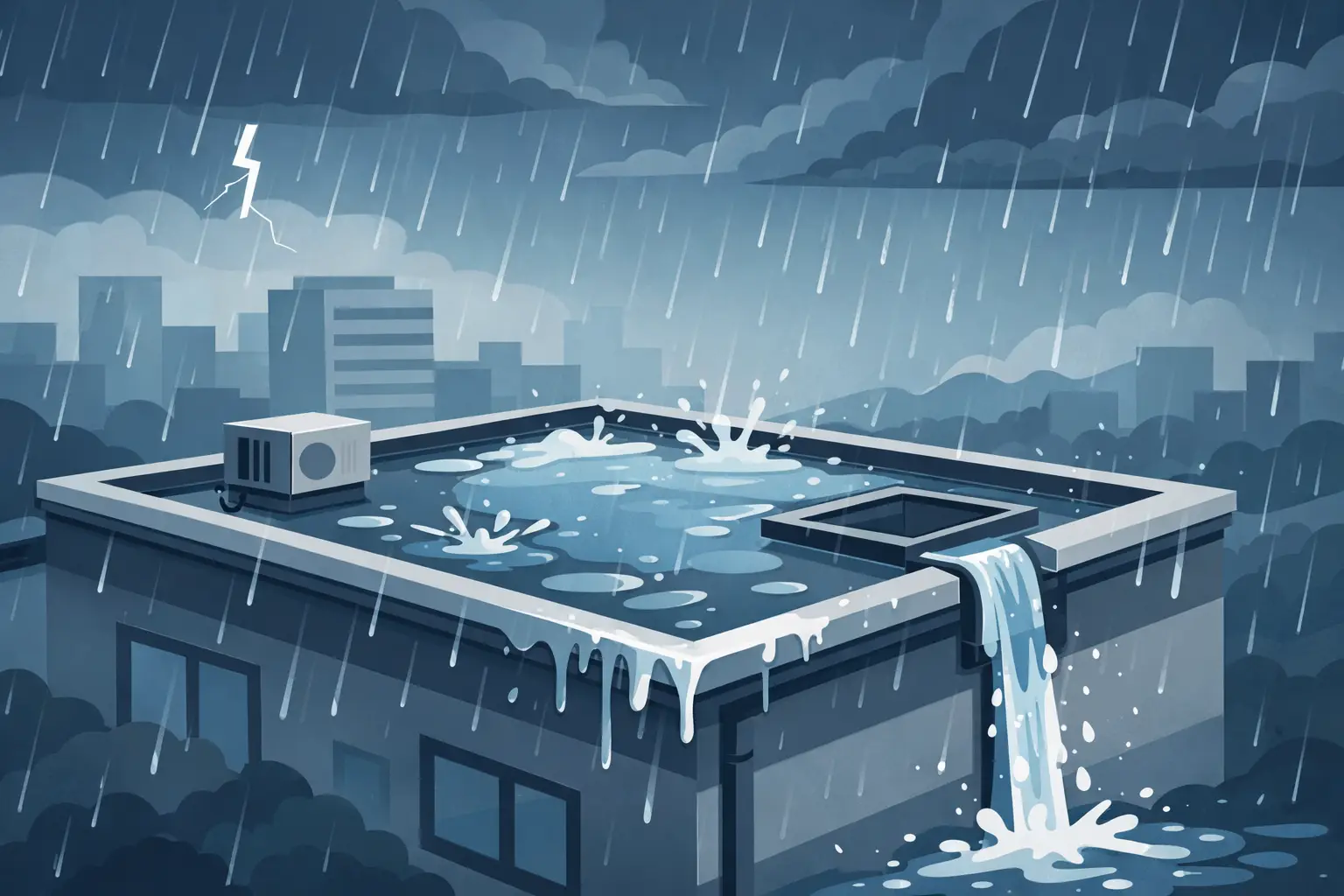
A flat roof during an Oregon downpour tends to make people nervous. Water sits for a while, drains more slowly than it does on a steep roof, and every puddle looks like a problem waiting to happen. So, can flat roofs handle heavy rain? Yes – if the roof is designed correctly, installed correctly, and kept in good condition.
That is the real answer. A flat roof is not supposed to shed water the same way a pitched roof does. It is supposed to manage water through slight slope, drainage points, durable membranes, and sound flashing details. When those parts are in place, a flat roof can perform well even in areas that see frequent rain.
Can flat roofs handle heavy rain in Oregon?
They can, but this is where quality matters. In Roseburg, Coos Bay, Coos County, and Douglas County, roofs have to deal with long wet stretches, not just an occasional storm. A flat roof that is poorly sloped, badly patched, or already aging will show problems faster in this kind of climate.
A properly built flat roof is never truly flat. It has a slight pitch that moves water toward drains, scuppers, or gutters. That small amount of slope is what keeps water from staying in place too long. Add the right roofing system and solid installation, and heavy rain becomes a drainage issue the roof is built to handle, not an automatic failure point.
The trouble starts when people assume all flat roofs are the same. They are not. A newer flat roof with a good membrane and clear drainage has a much better chance in heavy rain than an older roof with ponding, open seams, or soft spots in the decking.
What makes a flat roof handle rain well?
The biggest factor is drainage. Water needs a planned path off the roof. On a flat roof, that usually means interior drains, edge drains, scuppers, tapered insulation, or a combination of those features. If the roof cannot move water efficiently, it will hold it.
Material also matters. Different flat roofing systems have different strengths, but all of them rely on proper installation. A quality membrane can resist standing water for a period of time, but no roofing material performs at its best when water is allowed to sit day after day because the roof was never sloped or drained correctly.
Flashing is another major piece of the puzzle. Heavy rain finds weak points around penetrations, wall connections, skylights, HVAC curbs, vents, and roof edges. Many leaks blamed on the field of the roof actually begin at these transition points. Good craftsmanship at the details is what separates a roof that lasts from one that keeps needing service calls.
Roof structure matters too. The framing and decking under the membrane need to stay solid. If a roof sags, even slightly, water collects in the low areas and adds more weight. Over time, that can worsen the sag and increase the strain on the system.
Ponding water is the warning sign
The question is not just whether flat roofs can handle heavy rain. It is whether your flat roof is handling it the way it should.
Some temporary standing water after a storm is not unusual. Flat roofs often take longer to drain than steep-slope systems. But if water is still sitting there well after the rain stops, that is a warning sign. Persistent ponding usually points to drainage issues, structural settling, clogged outlets, or a roof that was never built with enough slope to begin with.
Ponding water increases wear on seams and flashing. It can speed up membrane breakdown, especially on an older roof. It also makes small defects harder to notice until they turn into interior leaks. In cold snaps, trapped water can add another layer of stress.
If you are seeing recurring puddles in the same areas, that is not something to ignore. It does not always mean full replacement is needed, but it does mean the roof should be inspected by someone who understands flat roofing systems.
Why flat roofs leak in heavy rain
Heavy rain exposes weaknesses. It does not usually create them out of nowhere.
A flat roof may leak during a storm because drains are clogged with leaves or debris. It may leak because flashing has pulled loose around an edge or penetration. It may leak because an older membrane has split, blistered, or opened at the seams. In some cases, a previous repair held for light weather but fails under sustained rainfall.
That is why leak location can be misleading. Water on a flat roof can travel before it shows up inside. A stain on a ceiling tile or wall panel does not always sit directly under the source of the problem. Proper diagnosis matters, especially on commercial properties and manufactured homes where low-slope details can be more complex than they appear.
Can an older flat roof still handle heavy rain?
Sometimes yes, but age changes the risk.
A well-maintained older flat roof may continue performing through wet seasons without major trouble. But over time, membranes dry out, seams weaken, flashing ages, and repairs layer over repairs. The roof may still look acceptable from the ground while becoming more vulnerable during prolonged rain.
This is where maintenance makes a real difference. Clearing drains, removing debris, treating moss where needed, checking seams, and addressing small defects early can extend the service life of a flat roof. Waiting until water is coming inside usually means the repair is larger and more expensive.
For property owners trying to decide between repair and replacement, the right answer depends on the roof’s condition, age, and pattern of issues. If the roof has isolated damage, repair may make sense. If it has widespread ponding, repeated leaks, and aging materials, replacement is often the more practical investment.
What property owners should watch for after heavy rain
After a major storm, it helps to pay attention to a few signs. If you can safely view the roof or surrounding areas, look for overflowing gutters, blocked downspouts, debris buildup, and water that seems to stay in one place. Inside the building, watch for ceiling stains, bubbling paint, damp insulation, musty odors, or drips around vents and wall lines.
Commercial property managers may also notice changes like wet ceiling tiles, stained parapet walls, or rooftop equipment sitting in standing water. Homeowners with flat roof sections over garages, additions, porches, or living spaces may first notice discoloration or soft drywall.
These signs do not always point to a catastrophic failure, but they do mean the roof should be looked at before the next storm hits.
The difference between a workable flat roof and a problem roof
The difference usually comes down to design, workmanship, and upkeep.
A workable flat roof has positive drainage, durable materials, properly finished edges, and flashing done by experienced hands. It is inspected when needed and repaired before small issues spread. It may still collect a little water briefly during a hard rain, but it moves that water off the roof as intended.
A problem roof often shows the opposite pattern. Water sits too long. Repairs are inconsistent. Seams and penetrations are vulnerable. Drainage is an afterthought instead of part of the system. In those cases, heavy rain does not cause the trouble so much as reveal it.
That is why flat roofing is not a place to cut corners. Smaller details matter. So does choosing a contractor who works on flat roofs regularly, not just occasionally. Flat roofing has its own installation methods, repair standards, and drainage demands.
When to call for a flat roof inspection
If your roof has leaked during recent storms, has visible ponding, or has not been inspected in years, it is time to have it checked. The same goes for roofs on manufactured homes, commercial buildings, and low-slope residential sections where drainage issues can stay hidden until interior damage appears.
An experienced flat roofing contractor can tell you whether the roof is still handling rain as designed, whether a repair will solve the issue, or whether the system is nearing the point where replacement makes more sense. For property owners in this region, that kind of straightforward assessment matters. Rich Rayburn Roofing works with residential and commercial flat roofs across local Oregon communities, and the goal is simple: fix what can be fixed, and build it right when it is time for more.
Heavy rain does not automatically make a flat roof a bad choice. A flat roof just has to be built and maintained for the weather it will face. If yours is showing signs that it is struggling, getting ahead of the next storm is usually the smartest move.