

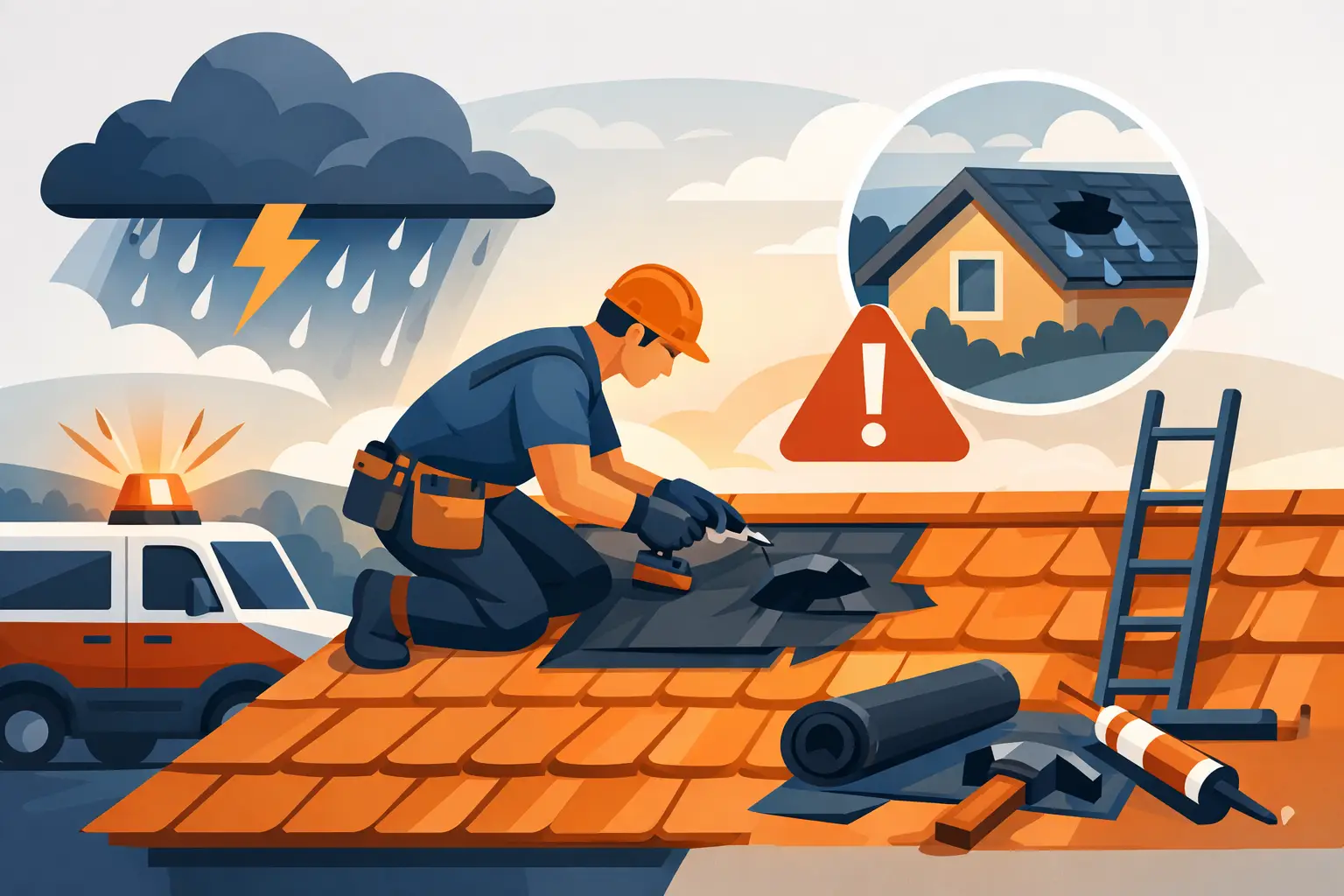
A roof leak rarely shows up at a convenient time. It starts with a stain spreading across drywall, water dripping into a hallway, or wind lifting part of a flat roof during a storm. In those first few minutes, an emergency roof repair guide matters because the right steps can limit interior damage, protect the structure, and make the repair process more straightforward once a contractor arrives.
The first priority is safety. If water is getting near light fixtures, electrical panels, or outlets, stay clear of that area and shut off power if you can do so safely. If part of the ceiling is sagging, do not stand underneath it. Wet drywall can fail without much warning. For commercial buildings and manufactured homes, the same rule applies – keep people away from affected areas until the source of the leak is under control.
What counts as a roofing emergency?
Not every roof problem needs same-day service, but some situations do. Active leaks during rain, storm damage, missing membrane or flashing, punctures on a flat roof, and tree impact are all emergencies. So are conditions that leave insulation exposed or allow water to move quickly into living space, offices, or storage areas.
A slow stain that has been there for months may not be an emergency, but it still needs attention. The difficult part is that small-looking leaks can hide bigger trouble. Water often travels before it becomes visible indoors, especially on low-slope and flat roofing systems. By the time you see it, the entry point may be several feet away.
Emergency roof repair guide – what to do first
Start inside the building. Put buckets, pans, or towels under active drips. If water is pooling in a ceiling bulge, that pressure needs careful attention. In some cases, making a small controlled drain hole in the lowest point of the bulge can prevent a larger ceiling collapse, but that step depends on the ceiling type and your comfort level. If you are unsure, leave it alone and keep the area clear.
Next, move furniture, electronics, inventory, and anything else that can be damaged by water. For homeowners, that may mean shifting a bed, dresser, or rugs. For property managers or business owners, it may involve covering equipment or relocating materials away from the affected zone.
Then document what you are seeing. Take clear photos of ceiling damage, wall staining, standing water, and any visible roof damage if it can be photographed safely from the ground. This helps with insurance, but it also helps a roofing contractor understand the urgency before arriving.
After that, call a qualified roofer. Emergency repairs are not the same as routine patchwork. The goal is to stop water intrusion fast, then determine whether the roof needs a targeted repair, a larger section rebuild, or full replacement. That depends on the roofing material, the age of the roof, and how much hidden moisture is already in the system.
What not to do during a roof emergency
The biggest mistake is climbing onto a wet roof in bad weather. That is especially risky on flat and low-slope roofs where standing water, slick membranes, and storm debris create fall hazards. Even if you can get up there, you may make the damage worse by stepping on weak decking or tearing the roofing surface further.
Another common mistake is using whatever sealant happens to be in the garage and treating it like a permanent fix. Temporary patch products can buy time in limited situations, but they are not one-size-fits-all. On flat roofs, the wrong material may not bond correctly, may trap moisture, or may interfere with proper repair later.
It is also a mistake to ignore a leak once the rain stops. Water damage keeps working after the storm passes. Insulation stays wet, decking can soften, mold can begin to grow, and repeated exposure shortens the life of the roof system.
Temporary protection can help, but it depends on the damage
There are situations where temporary protection makes sense before the crew gets there. If shingles or roofing material have blown off and conditions are safe, a secured tarp may reduce additional water entry. If a flat roof has an obvious puncture or open seam, containment inside the building may be the safer first move until proper repair materials are used.
The key point is that temporary protection is meant to reduce damage, not solve the problem. A roof that leaks during one storm will usually leak again, often in a larger area, if the actual failure is not repaired correctly.
For commercial properties, temporary measures also need to account for business operations. Blocking off an area may be enough for a few hours. It is not enough if inventory, electrical systems, tenant spaces, or customer access are at risk. Fast assessment matters because downtime can cost more than the repair itself.
Why flat roofs need a different emergency response
Flat roofs and low-slope systems behave differently than steep-slope roofs. Water does not shed as quickly, so ponding water can increase the chance of leaks around seams, drains, penetrations, flashing edges, and patched areas. Wind can also get under loose membrane sections and turn a small failure into a larger one fast.
That is why emergency response on flat roofing should focus on finding the real failure point, not just the indoor drip location. A leak around an HVAC curb, vent, skylight, drain, or edge metal may show up far from where water enters the building. This is one reason experienced flat roof contractors are valuable during emergencies. They know how to track moisture paths and repair the correct area.
Manufactured homes with flat or low-slope roofs need the same level of care. Because these structures can be more vulnerable to water intrusion around seams and transitions, a delay in repair can lead to interior damage quickly.
Repair or replace? The answer depends on age and condition
An emergency does not always mean you need a new roof. If the system is in generally good shape and the damage is localized, a proper repair may be the best option. That is often true after a puncture, isolated flashing failure, or storm-related edge damage.
But there are cases where repair is only a short-term answer. If the roof has repeated leak history, widespread soft spots, saturated insulation, failing seams, or advanced age, putting money into another patch may not make sense. Property owners are often frustrated when a leak is stopped, only to have another one show up a few feet away months later. That usually points to broader roof failure rather than a single bad spot.
A good contractor should be direct about that. Sometimes the right move is an emergency repair now, followed by a replacement plan once conditions allow. That gives you immediate protection without pretending a worn-out roof has years of life left.
What to expect from a professional emergency roof repair guide in real life
When a roofer arrives for emergency service, the first step is usually containment and stabilization. Stop active water entry if possible. Protect exposed areas. Identify obvious damage. After that comes a closer inspection to determine the extent of the problem and whether moisture has spread beneath the surface.
From there, the solution may be a temporary watertight repair, a permanent repair completed right away, or a plan for follow-up work once the roof is dry enough and conditions are safe. Weather matters. Roof type matters. Access matters. A repair done too quickly with the wrong material can fail just as fast as the original problem.
This is where experience matters more than size. A skilled roofing crew that knows flat systems, responds quickly, and works efficiently can often prevent a bad situation from turning into a major loss. That practical, job-first approach is what property owners need when water is already inside the building.
How to reduce the next emergency
The best emergency repair is the one you never need. Regular inspections, drain cleaning, seam checks, flashing maintenance, moss treatment where needed, and prompt repair of small issues all help extend roof life. On flat roofs, keeping drains open and addressing ponding early can make a real difference.
For homeowners, that means paying attention after wind and heavy rain. For commercial properties, it means having a maintenance plan instead of waiting for tenants to report a leak. If your roof has already had one emergency, that is reason enough to look at its overall condition before the next storm does it for you.
If you are dealing with active roof damage in Douglas County or Coos County, the right next step is not guesswork. It is getting an experienced roofer to assess the problem, stop the leak, and tell you plainly whether you need a repair, a larger fix, or a replacement. Fast action protects more than the roof – it protects everything under it.