

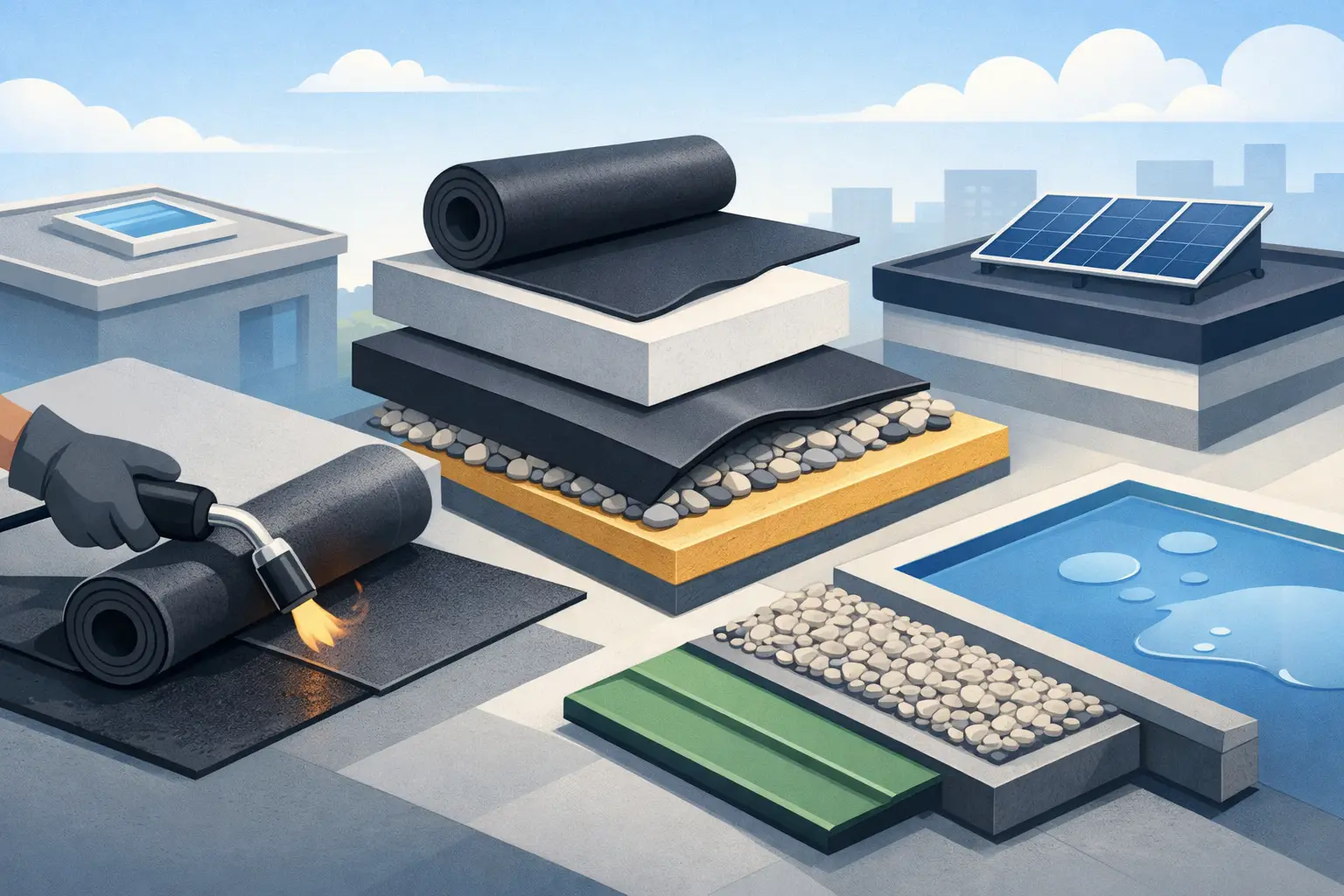
A flat roof that ponds water every winter or bakes in summer sun will tell you pretty quickly whether the material was the right choice. Around the Oregon coast and inland valleys, the best materials for flat roofs are the ones that match the building, drainage, weather exposure, and budget – not just the ones with the lowest upfront price.
That matters whether you own a home in Roseburg, manage a commercial building in Coos Bay, or need a durable roof for a manufactured home. Flat roofing is not one-size-fits-all. Some systems handle standing water better. Some are easier to repair. Some cost more at installation but hold up better over time. The right answer depends on how the roof is used and how long you plan to keep the property.
What makes a flat roofing material a good choice?
On a flat or low-slope roof, water moves slower than it does on a steep roof. That makes waterproofing, seam quality, and drainage performance more important. A material might look good on paper, but if it does not handle local rain, debris, foot traffic, or temperature swings well, it can become a problem.
The best flat roof materials usually come down to a few practical factors: lifespan, seam strength, puncture resistance, repairability, energy performance, and installation quality. Installation matters as much as the product itself. Even a good membrane will fail early if the roof deck has issues, flashing is weak, or drainage is ignored.
Best materials for flat roofs: the main options
TPO roofing
TPO is one of the most common flat roofing materials used today, especially on commercial buildings. It is a single-ply membrane known for its heat-welded seams, bright reflective surface, and relatively competitive cost.
For many property owners, TPO hits a practical middle ground. It is often more affordable than PVC while still giving you a clean, modern membrane roof with good energy efficiency. In sunny conditions, the reflective surface can help reduce heat gain.
The trade-off is that not all TPO products perform the same. Membrane thickness, manufacturer quality, and installer experience all matter. A well-installed TPO roof can be a strong long-term option, but a lower-grade product or poor seam work can shorten its life.
TPO is often a solid fit for commercial properties, residential flat roof sections, and larger roofs where value and performance both matter.
PVC roofing
PVC is another single-ply membrane, and in many cases it is considered a step up in chemical resistance and seam reliability. The seams are heat welded, which creates a very strong bond when done correctly.
PVC tends to perform well on buildings exposed to grease, chemicals, or harsh rooftop conditions, which is one reason it is common on restaurants and certain commercial facilities. It is also reflective and can be a good choice for energy-conscious building owners.
The main drawback is cost. PVC usually comes in at a higher price than TPO or EPDM. For some property owners, that added cost is worth it because of the membrane’s durability and weldable seams. For others, especially on smaller or more budget-sensitive projects, it may be more material than they need.
EPDM roofing
EPDM is a rubber membrane that has been used on flat roofs for decades. It has a long track record and is known for weather resistance and flexibility. In many cases, it is one of the more cost-effective options for a flat roof replacement.
One advantage of EPDM is that it handles temperature movement well. It can be a dependable choice on both residential and commercial roofs. Repairs can also be straightforward when the roof is accessible and the problem is properly identified.
Its trade-offs are worth understanding. Standard black EPDM absorbs more heat than white reflective membranes, which may matter on some buildings. Seams are also handled differently than heat-welded systems, so workmanship is critical. EPDM can be a very good roof, but it is usually best for owners who value proven performance over a newer-looking system.
Modified bitumen
Modified bitumen is an asphalt-based roofing system designed for low-slope roofs. It is built in layers and can be applied using different methods, depending on the product and the roof conditions.
This material remains a practical option for many residential flat roofs, manufactured homes, and certain smaller commercial buildings. It is generally tougher under foot traffic than some single-ply systems and can perform well when properly installed and maintained.
The downside is that installation quality is everything. Because modified bitumen involves seams, flashing details, and often more labor, it is not a material you want installed by a crew that does not specialize in flat roofing. It also may not offer the same reflectivity or clean membrane appearance that some owners want.
Still, for the right roof, modified bitumen is dependable, repairable, and often a smart value.
Built-up roofing
Built-up roofing, often called BUR, is the traditional tar-and-gravel style system many people think of when they picture an older flat roof. It uses multiple layers to create redundancy and durability.
BUR can provide solid waterproofing and good protection against wear. Because it is a multi-layer system, it has built-in backup compared with some thinner membrane roofs. That can be appealing on buildings where long-term durability matters more than appearance.
The drawbacks are weight, labor, and installation complexity. BUR is not always the most economical or easiest system for modern replacement work. It can also be messier and slower to install than newer single-ply materials. In some cases, there are simply better options now unless the building specifically benefits from a multi-layer assembly.
Standing seam metal for low-slope applications
Not every low-slope roof should get a membrane. In some cases, standing seam metal can be used on roofs with enough pitch to support it. This is not a true flat roof solution for every building, but on certain low-slope designs it can be an excellent long-term material.
Metal is durable, attractive, and often lasts a long time when detailed correctly. It sheds water well on the right pitch and can be a strong fit for residential or specialty projects.
The catch is pitch requirements and cost. Metal is not the answer for roofs that are too flat or have drainage issues. If a building has very low slope, a membrane system is usually the better fit.
How to choose the best flat roof material for your building
The first question is how the roof is used. A warehouse, a restaurant, a manufactured home, and a house with a small flat roof section may all need different solutions. Traffic, rooftop equipment, drainage patterns, and exposure all matter.
Budget matters too, but the lowest initial price can be expensive if the roof needs major repairs early. A better approach is to look at service life and maintenance costs over time. In many cases, spending more for stronger seams or better puncture resistance saves money later.
Drainage is another key issue. If a roof holds water for long periods, some materials will tolerate that better than others. That does not mean ponding water should be ignored. It means the roof should be evaluated as a system, including insulation, slope, drains, flashing, and edge details.
For commercial buildings, TPO and PVC are common choices because they cover large areas efficiently and provide clean, welded seams. For homeowners and manufactured home owners, EPDM or modified bitumen may make more sense depending on the structure, the budget, and the roof layout.
Material is only half the job
A good flat roof depends on more than membrane choice. The deck condition, insulation plan, edge metal, penetrations, and drainage design all affect how the roof performs. Two roofs with the same material can have very different lifespans based on installation quality alone.
That is why experience matters. Flat roofing has less margin for error than many steep-slope systems. Small mistakes around seams or flashing can lead to leaks that travel and show up far from the source. A contractor who works on flat roofs regularly will usually spot the problem areas before they become expensive ones.
For property owners in Douglas and Coos County, that local experience also helps with weather-related decisions. Coastal moisture, inland heat, debris load, and moss growth can all influence what roofing system makes the most sense. Rich Rayburn Roofing focuses on these kinds of practical decisions because the right roof is the one that holds up in real service, not just in a brochure.
If you are weighing options for a flat roof replacement or new installation, the best move is to compare materials based on your building, not just general ratings. A roof should fit the structure, the climate, and the budget well enough to perform for years without becoming a constant repair job. That is usually where the best value is found.