
If you are trying to figure out the easiest flat roof to install, the short answer is usually a single-ply membrane. In most cases, TPO or EPDM is faster and simpler to install than built-up roofing or more labor-heavy systems. But easy does not always mean best, and the right choice depends on the building, the roof layout, and how long you want the system to last.
That matters here in Oregon. Flat roofs in Roseburg, Coos Bay, Coos County, and Douglas County deal with regular rain, moisture, debris, and periods of standing water. A roof that goes on quickly but does not fit the structure or drainage plan can become a costly problem. The easiest system to install should still be one that performs well over time.
The easiest flat roof to install for most buildings
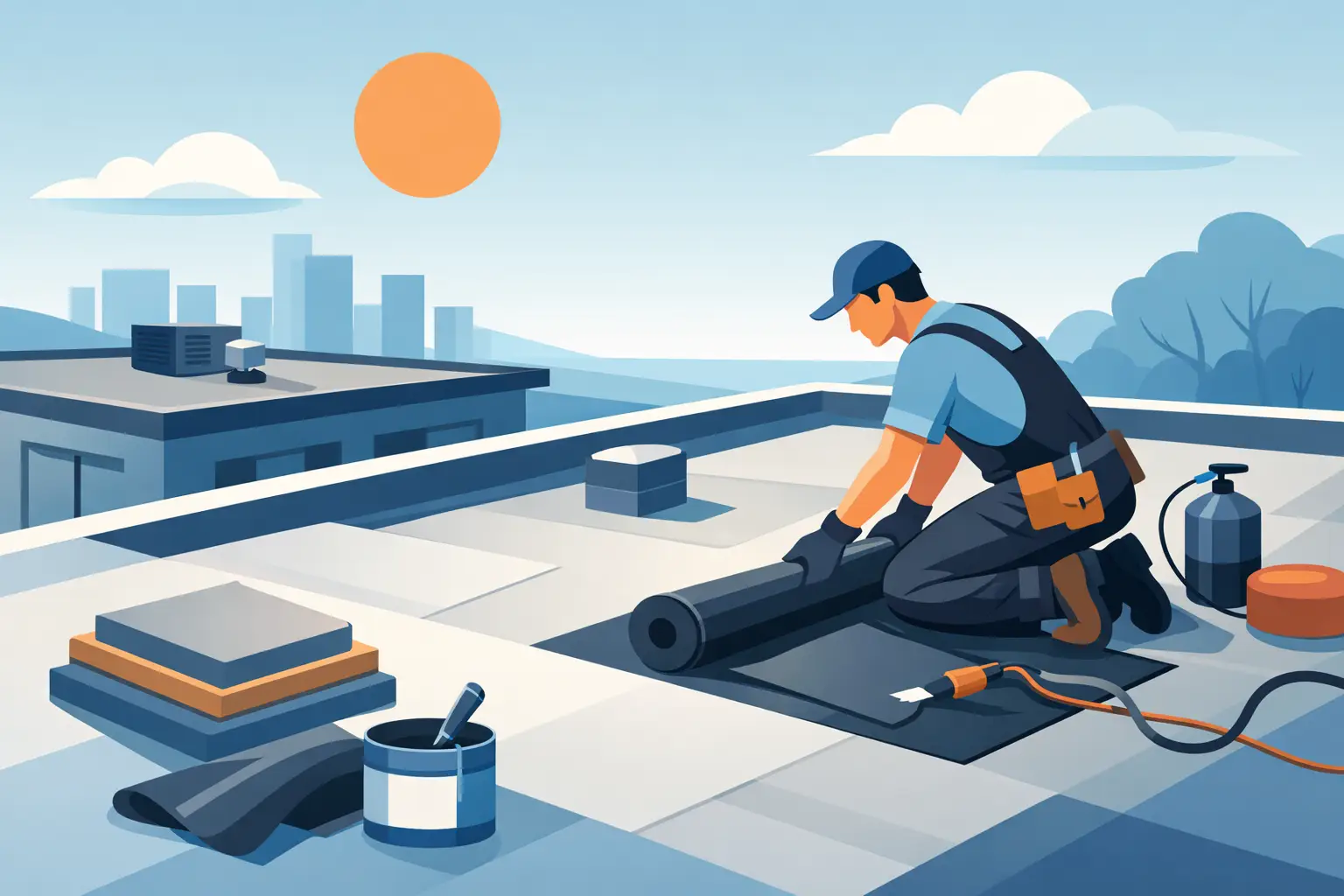
For many residential and commercial properties, TPO is often the easiest flat roof to install. It comes in large rolls, covers ground quickly, and can be mechanically attached, adhered, or heat welded depending on the project. On a clean, open roof with good access, an experienced crew can move efficiently and create a neat, uniform surface.
EPDM is another strong candidate. It is a rubber membrane that has been used on flat roofs for decades. It is flexible, relatively forgiving on simple roof layouts, and often easier to work with than systems that require multiple asphalt-based layers. On smaller or less complex roofs, EPDM can be a straightforward installation.
Modified bitumen can also be practical, but it is usually not the first answer if the only question is ease of installation. It involves more steps, more seams, and more labor than many single-ply systems. Built-up roofing is even more labor-intensive, which makes it less likely to be the easiest option.
Why some flat roofs are easier to install than others
Ease of installation is not just about the material. It comes down to how many steps the system requires, how heavy the materials are, how many seams need to be managed, and how much roof prep is necessary before work begins.
A single-ply membrane has an advantage because it is one primary waterproofing layer. That keeps the process simpler. Large sheets mean fewer seams, and fewer seams usually mean fewer potential trouble spots if the work is done correctly.
By contrast, layered systems take more time. If a roof needs a base sheet, adhesive or asphalt, reinforcement, cap sheets, and detailed flashing work at multiple penetrations, the labor goes up quickly. That does not make the system bad. It just makes it more demanding to install.
Roof shape also changes the answer. A flat roof with a few vents and one HVAC unit is much easier than a roof with parapet walls, skylights, drains, pipes, and uneven transitions. Even the easiest flat roof to install becomes more technical when the layout gets crowded.
TPO: often the practical answer
TPO has become a popular option because it gives contractors a practical balance of speed, durability, and clean installation. The rolls are wide, the seams are welded, and the material works well on many commercial roofs and some residential flat roofs.
On a simple building, TPO can go down quickly with the right crew. That helps control labor costs, which is one reason property owners ask about it so often. It also has a bright surface option that can help reflect heat, which some owners prefer.
The trade-off is that TPO still needs skilled installation. Heat-welded seams need to be done right. Edge details, penetrations, and drainage areas matter just as much as the field membrane. A roof can be easy to install in general and still fail early if the crew cuts corners.
EPDM: simple, proven, and often forgiving
EPDM is another one of the easiest systems to work with, especially on uncomplicated flat roofs. It is flexible and handles movement well, which can be helpful in changing temperatures and on older structures.
One reason installers like EPDM is that it can adapt to certain roof conditions without as much stiffness as some other materials. On broad, open roof areas, it can be efficient to lay out. It also has a long track record, which gives many owners confidence.
The trade-off is in the seams and appearance. Depending on the installation method, seam work needs close attention, and some owners prefer the look or performance profile of other membranes. EPDM is often a very practical choice, but not always the top pick for every building.
Modified bitumen: durable, but usually not the easiest
Modified bitumen is a reliable system when installed properly, and it can be a good fit for residential flat roofs, low-slope sections, and buildings where a tougher surface is preferred. It is especially common when owners want a system with some redundancy and familiarity.
Still, if the question is strictly which roof is easiest to install, modified bitumen usually falls behind TPO and EPDM. It often takes more hands-on work and more time. There may be torch-applied, self-adhered, or cold-applied versions, but even then, it generally involves more labor than a basic single-ply membrane job.
That said, easier is not always better. On some roofs, modified bitumen makes sense because of traffic, surface toughness, or the way the assembly is built. Installation speed should never be the only factor.
When the easiest flat roof to install is not the best choice
This is where property owners can get tripped up. It is natural to ask for the fastest or least complicated roof system. But the right flat roof has to match the building.
If the roof has poor drainage, frequent foot traffic, or a lot of rooftop equipment, the simplest material may not deliver the best long-term value. If the deck has moisture issues or the existing roof has multiple layers, prep work may be more important than the membrane choice itself.
Climate matters too. In western Oregon, moisture management is a big part of flat roofing. A roof system should be selected with drainage, flashing, and long-term water exposure in mind. A quick install does not help much if the system is not designed for local conditions.
Installation method matters as much as material
People often compare roofing materials without realizing that installation method changes everything. The same TPO roof can be mechanically attached on one building and fully adhered on another. Those are different jobs with different labor demands.
The roof deck also matters. Wood, metal, and concrete decks each affect how the system is installed. Insulation thickness, cover boards, attachment requirements, and edge conditions all influence the process. That is why there is no universal answer that fits every flat roof.
A smaller, experienced crew can often install a so-called harder system better and more efficiently than a larger crew that is less specialized. That is one reason workmanship matters so much in flat roofing. Good planning and proper details save more trouble than chasing the easiest material on paper.
How to choose the right flat roof for your property
A better question than what is the easiest flat roof to install might be this: what is the most practical flat roof for this building? That shifts the focus from speed alone to long-term performance and value.
For many owners, TPO is the starting point because it is efficient and widely used. EPDM is also a strong option when flexibility and simplicity are priorities. Modified bitumen deserves consideration when durability under tougher use matters more than installation speed.
The right decision usually comes after looking at the roof size, slope, drainage, existing condition, budget, and expected service life. A warehouse, a manufactured home, and a residential addition may all need different answers even if each has a flat roof.
At Rich Rayburn Roofing, that kind of decision is based on the roof in front of us, not a one-size-fits-all pitch. The easiest flat roof to install can be a good choice, but only when it is also the right fit for the building and the people counting on it.
If you are weighing options for a flat roof, keep the goal simple: choose the system that can be installed correctly, drain properly, and hold up over the years. Fast is helpful. Done right is what saves money.